
Midnight Madness: Hiking in the Dark
This hike began like most legendary tales—slightly disorganized and fueled by questionable decision-making. While some of us opted for a sensible Saturday start, Hugo, Mathilde, Mathis, and Samuele, in their infinite wisdom, chose to kick things off Friday night, because who wouldn’t want to begin a mountain hike in the dead of night, right? They arrived in Pasaia really late, which means their hike didn’t technically begin until they managed to locate the trail, their flashlight batteries, and, you know, their collective will to live.
I wasn’t physically present, but I gathered a treasure trove of anecdotes and evidence (in the form of photos and stories) to reconstruct their adventure. And oh, what an adventure it was. The first challenge? Finding the path in the dark and securing a place to sleep, which—given the rugged coastline—was like trying to set up camp on the moon: equal parts impossible and mysteriously beautiful.
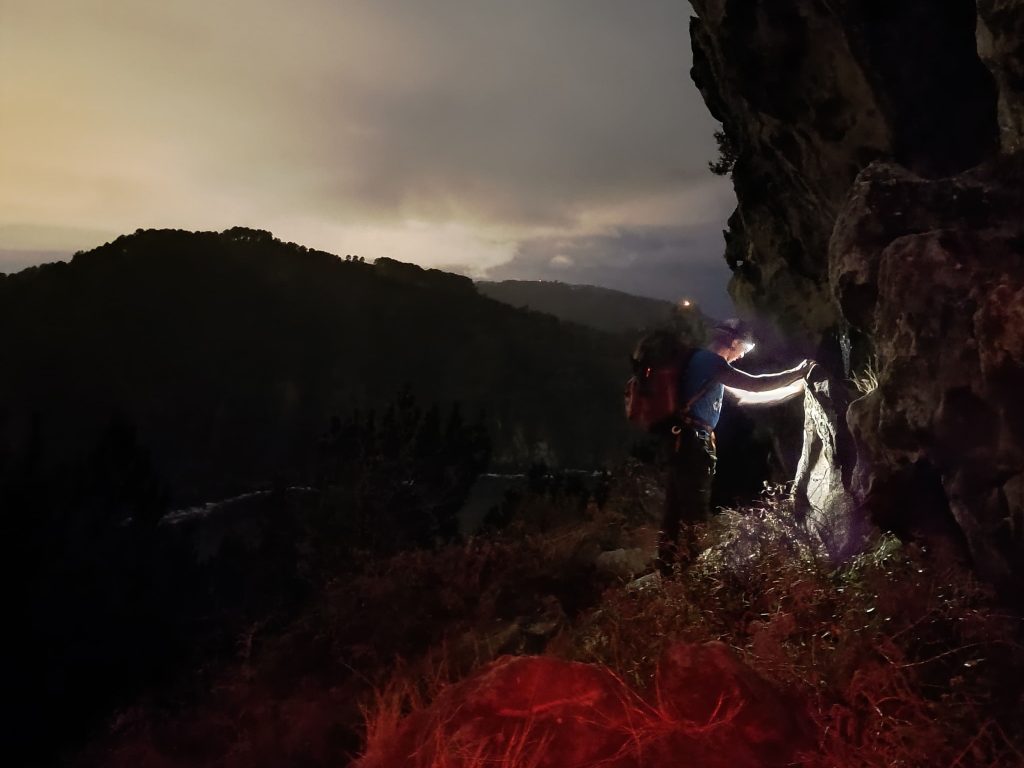
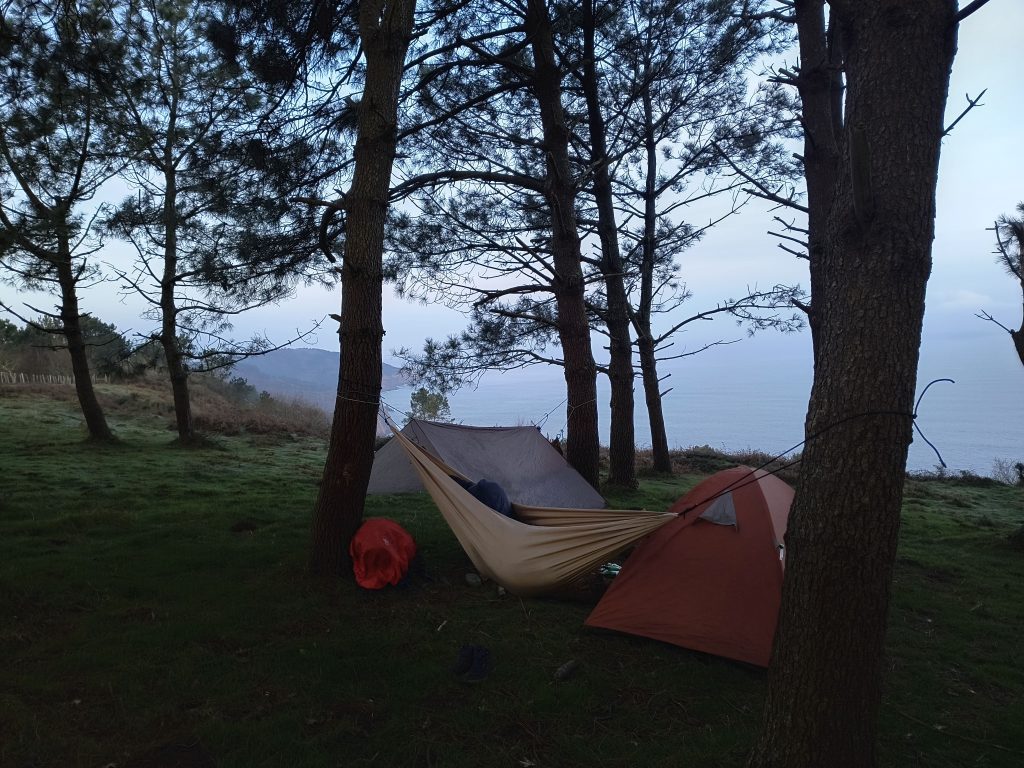
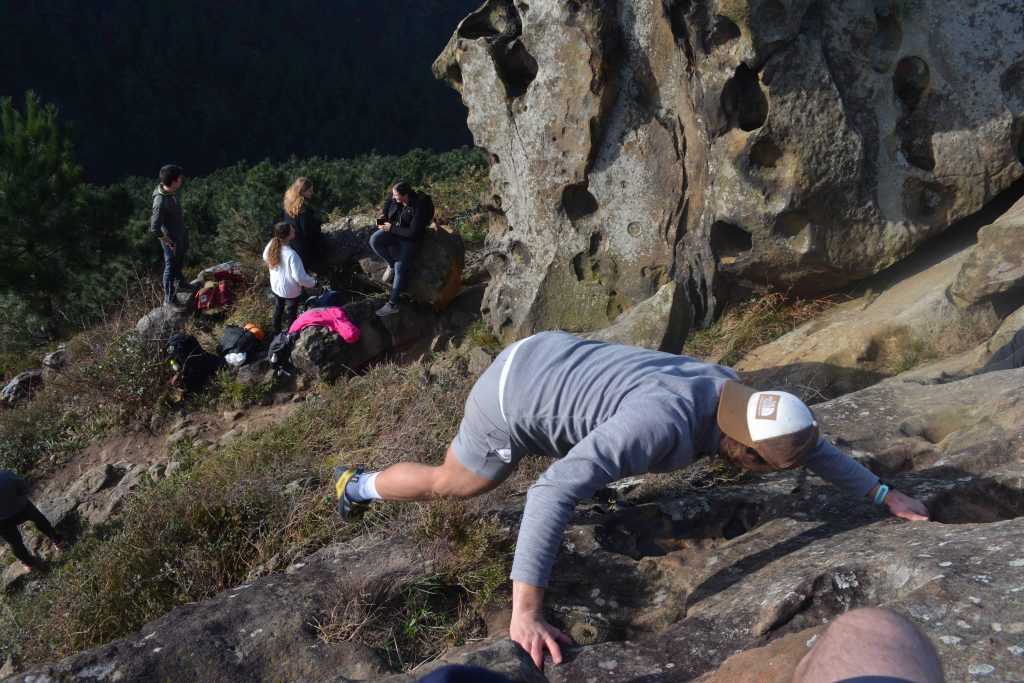
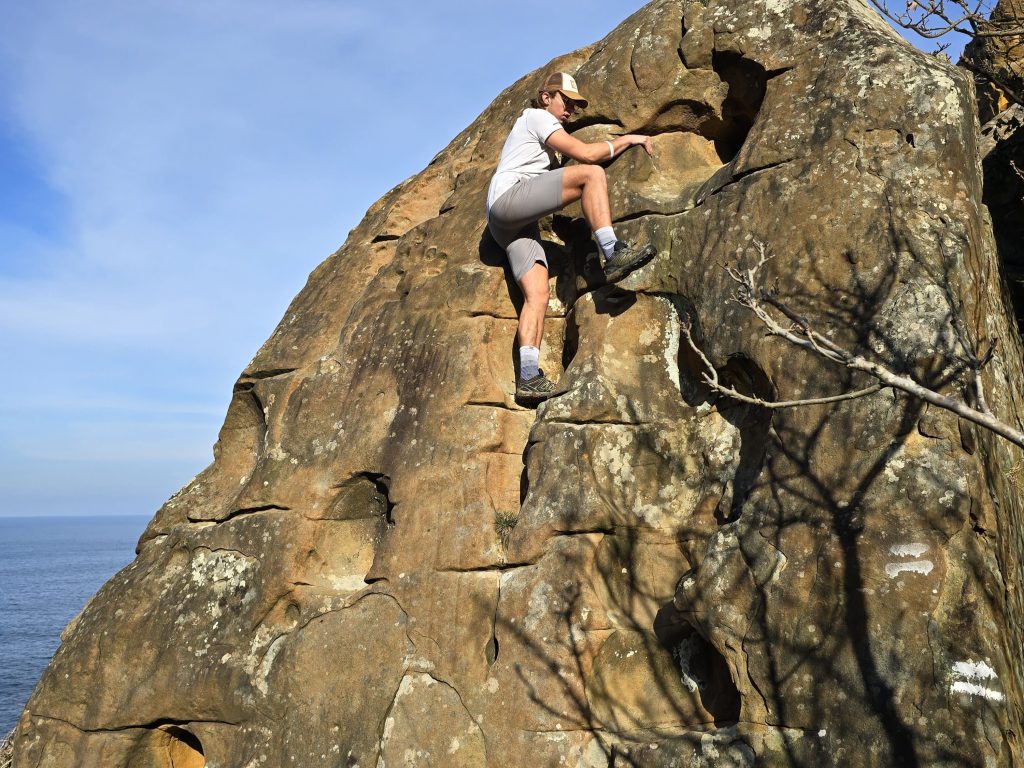
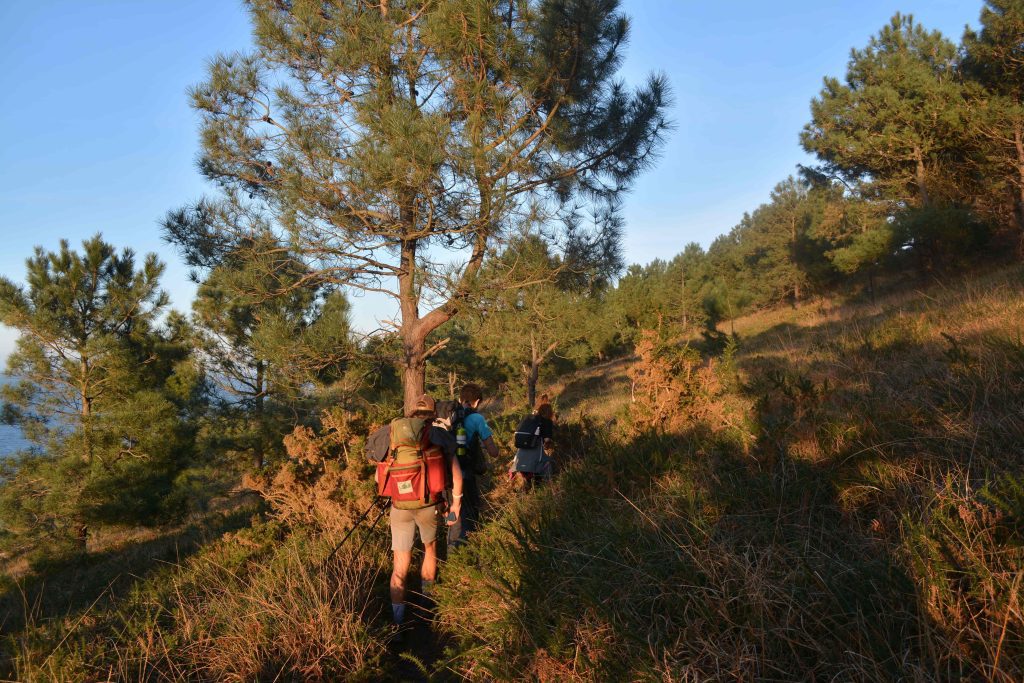
Their first obstacle: ascending Jaizkibel under a sky full of stars and mild existential dread. Just past the modern lighthouse, Mathis—blessed with an innate need to climb anything that isn’t nailed down—decided to boulder some rocks. It was, of course, not just about reaching the top; it was about the perfect rock for a brief existential crisis (and a bit of fun). From there, they wandered through the land until they reached a forest of towering pine trees, where they made camp—right in the heart of what could be described as a majestic pine cathedral.
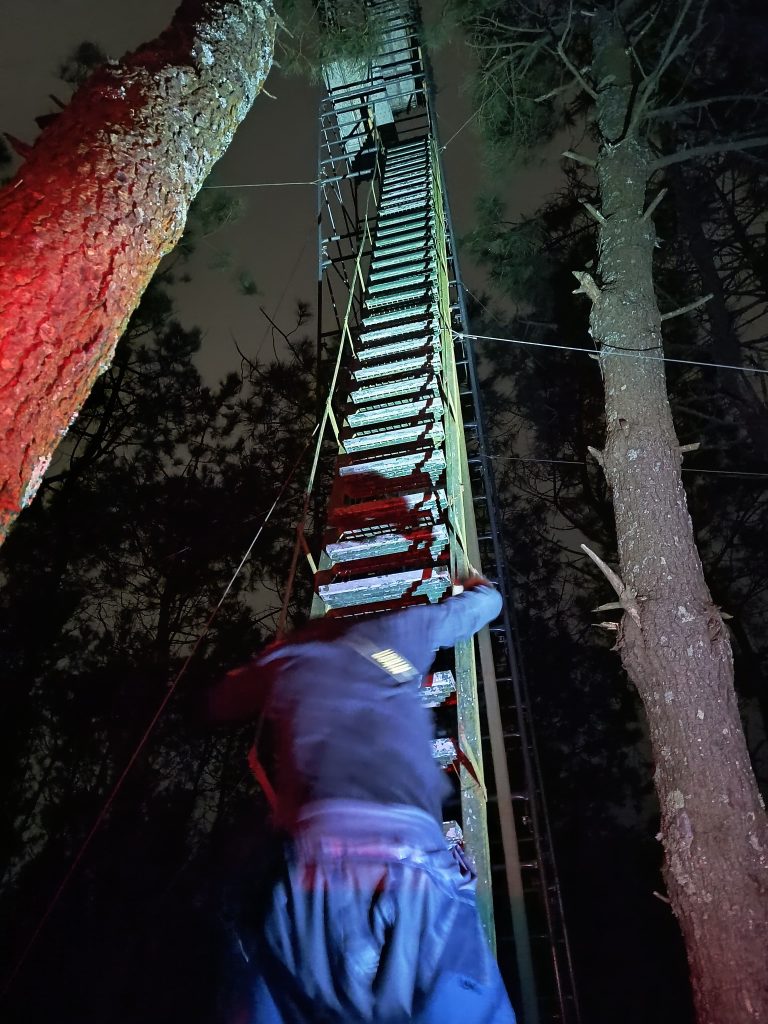
As they set up, they noticed something peculiar: those iconic Basque hunting platforms perched in the trees, looking like treehouses that the Tarzan franchise never quite managed to bring to life. Naturally, they had to climb them. The allure of a deluxe view from the treetops proved irresistible, so they scrambled up, embraced their inner Basil the Great Adventurer, and witnessed the kind of view that would’ve made any bird envious.
Red Lights, Cheese, and Freezing Nights
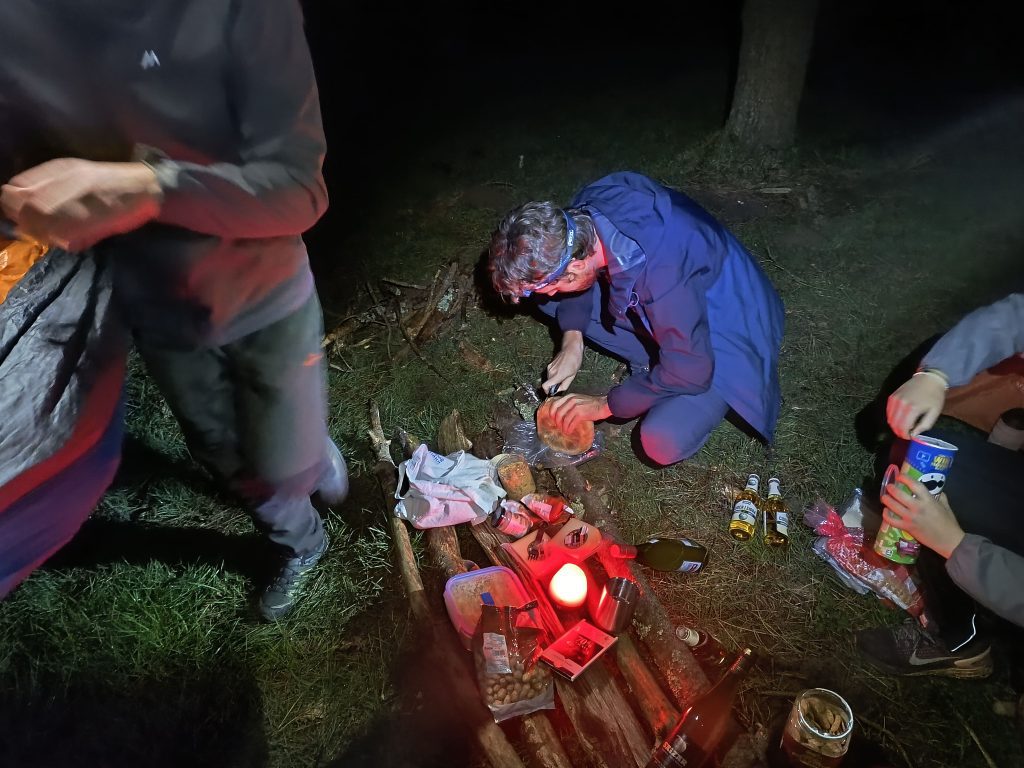
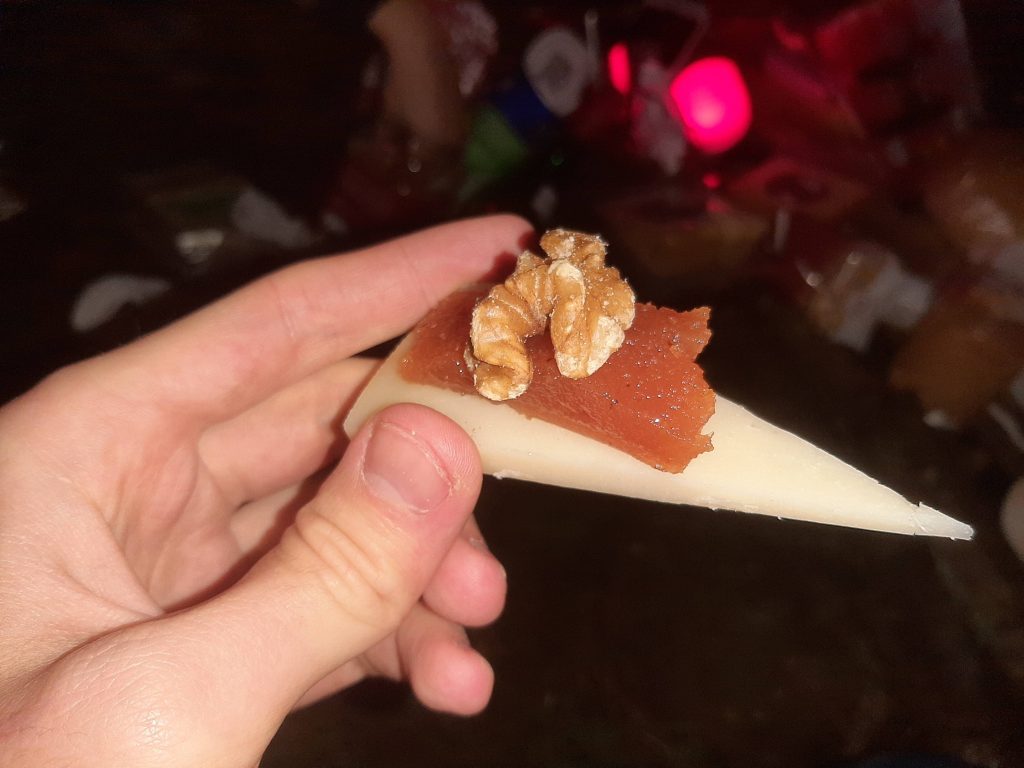
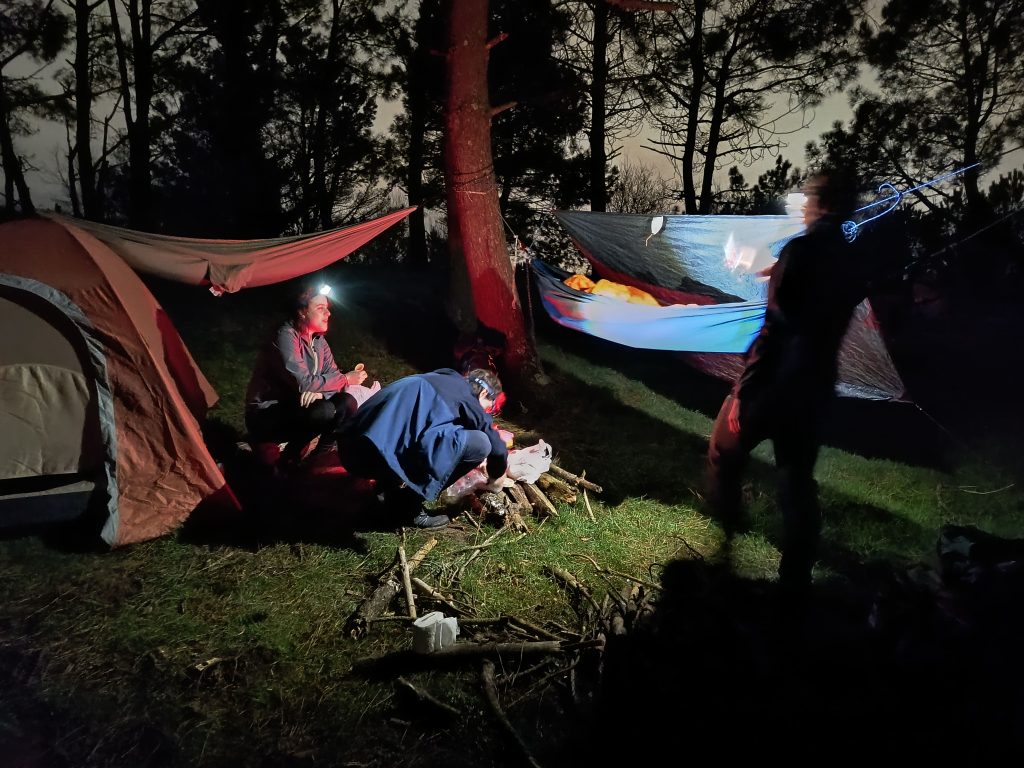
As the night turned colder (because, of course, it did), they turned on a red lamp—not for actual warmth, but to create the illusion of a comforting fire. A psychological victory, perhaps, if not a physical one. After all, no one wants to just survive; they wanted to thrive. And no Basque adventure is complete without dessert, so out came the membrillo and cheese, because who wouldn’t want to end a challenging day with an odd, yet perfect, pairing of fruit paste and dairy?
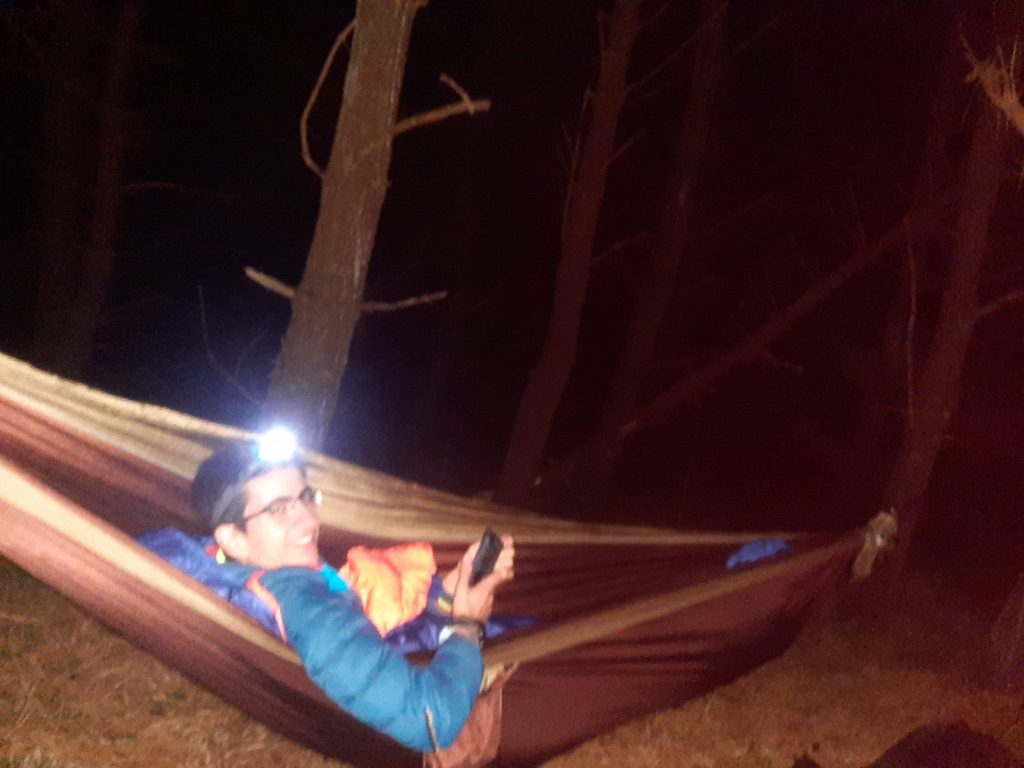
With the red glow fading and the cold setting in, it was time to figure out where to sleep. Some embraced the freedom of hammocks, while others sought more protection, wrapping themselves in tarps like cocooned adventurers trying to avoid becoming human icicles. The tent group, meanwhile, could only sigh in relief as they imagined the hammock group curled up in the open wind, suffering the most authentic form of discomfort. But hey, the morning views of the ocean made it all worth it, right? Right?
Pasaia Square: Map Failures
For the rest of us, our adventure began in a slightly more conventional manner: a meeting in the Old Town Square of Pasaia. I arrived by car (because, let’s be honest, walking was not an option), and Alizée, Camille, and Héloïse were already there, ready to embark on the epic journey that had yet to begin.
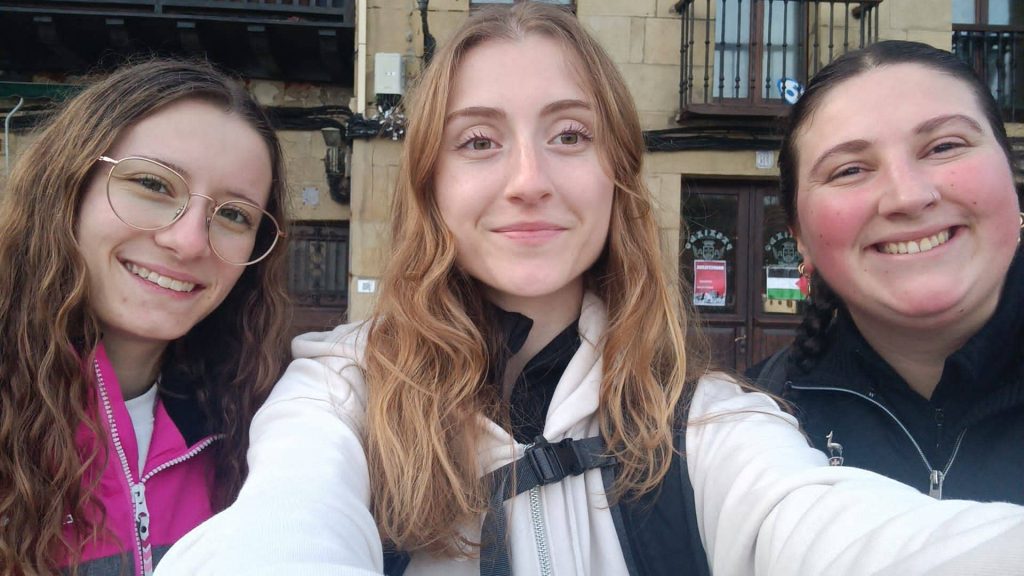
And then, the first comedy of errors. We waited—first for the two Sebastians from Argentina, then for Kata, who had ended up in Amara, Donostia, instead of Santiago Plaza in Pasaia. Ah, the joys of meeting in Basque Town Squares—so many of them, so few signs. But after a bit of back-and-forth, and an exchange of various desperate phone calls, we were ready.
It was time to go, but—spoiler alert—we had no idea where the night crew had ended up. No one had updated us, so we set off, hoping our paths would magically cross. Just as we reached the perfect bouldering spot (the one where Mathis had been scaling rocks like a hyperactive mountain goat the night before), we spotted them from a distance, like characters in some mythical journey, emerging from the mists of time. Thanks to my shiny new phone with astronomical zoom, we were able to catch a glimpse of their heroic progress. We waved, and there they were—arriving just in time to start the hike… officially.
Zarzas and Confusion
As the hike continued, we entered a forest thick with zarzas (blackberry bushes) and pintxos of confusion—mostly because we couldn’t quite figure out which way we were supposed to be going. Getting lost was, of course, inevitable. But rather than panicking, we embraced the chaos and wandered until we found the path again. This wasn’t just a hike; it was a metaphor for life: you might get lost, but eventually, you find your way back.
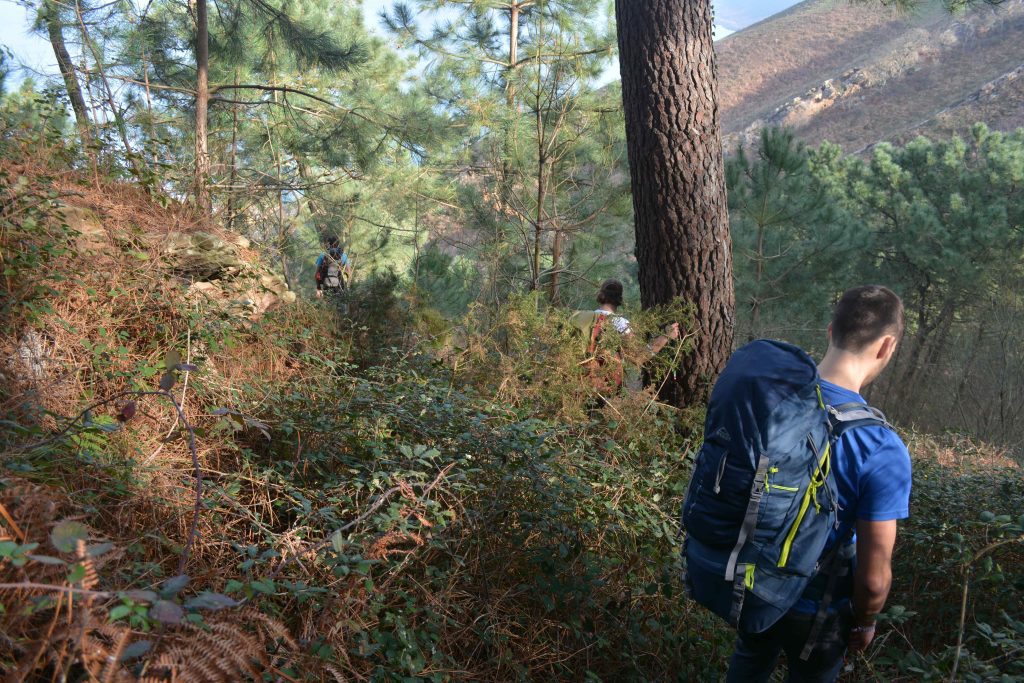
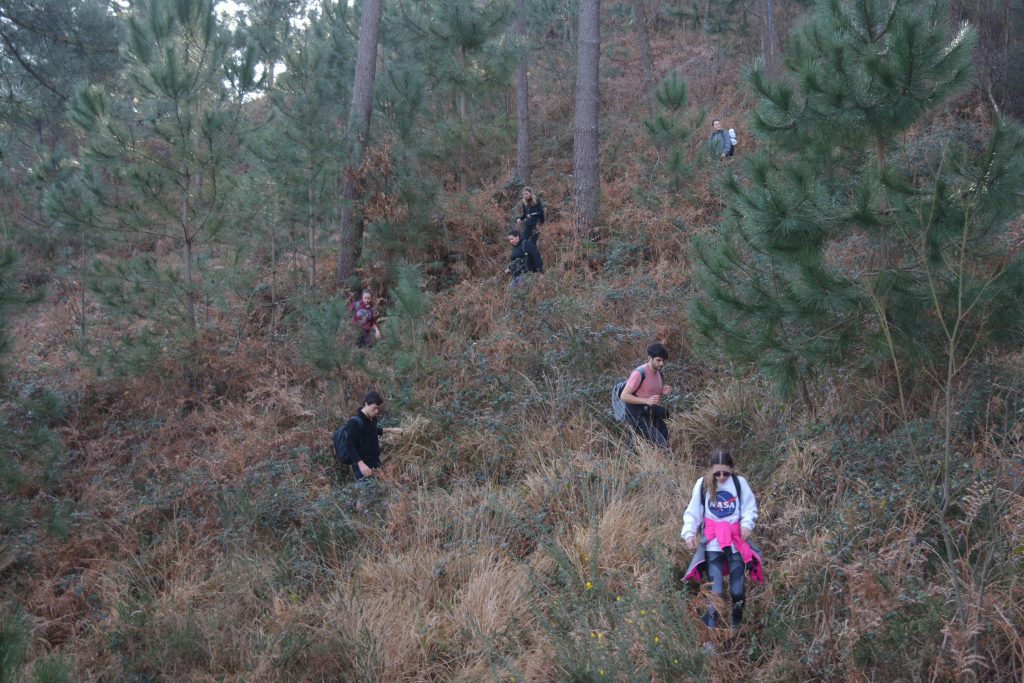
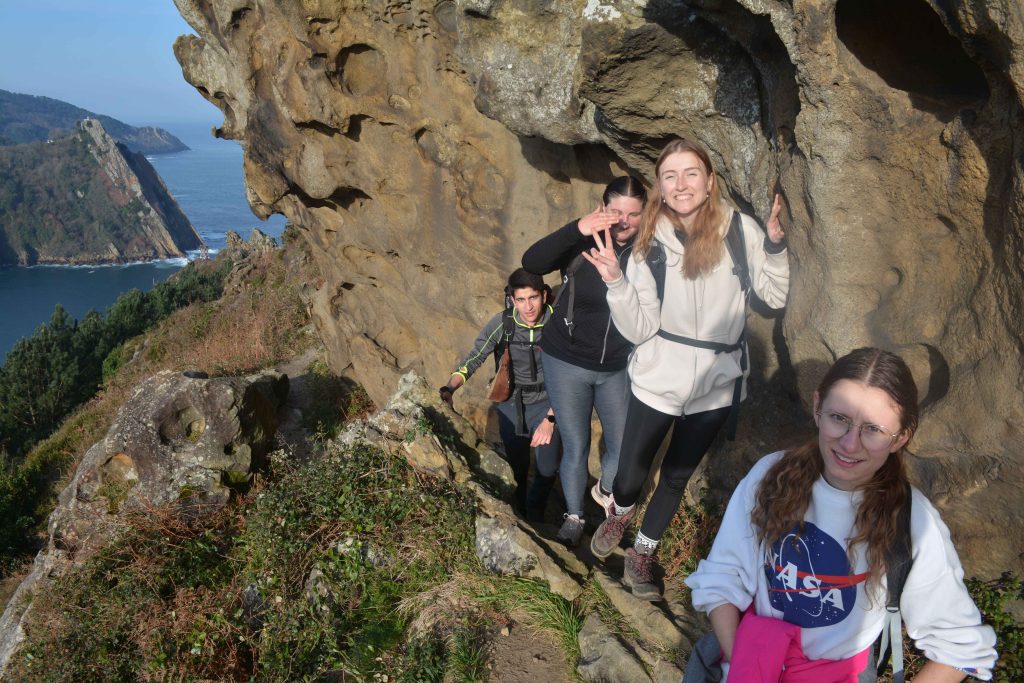
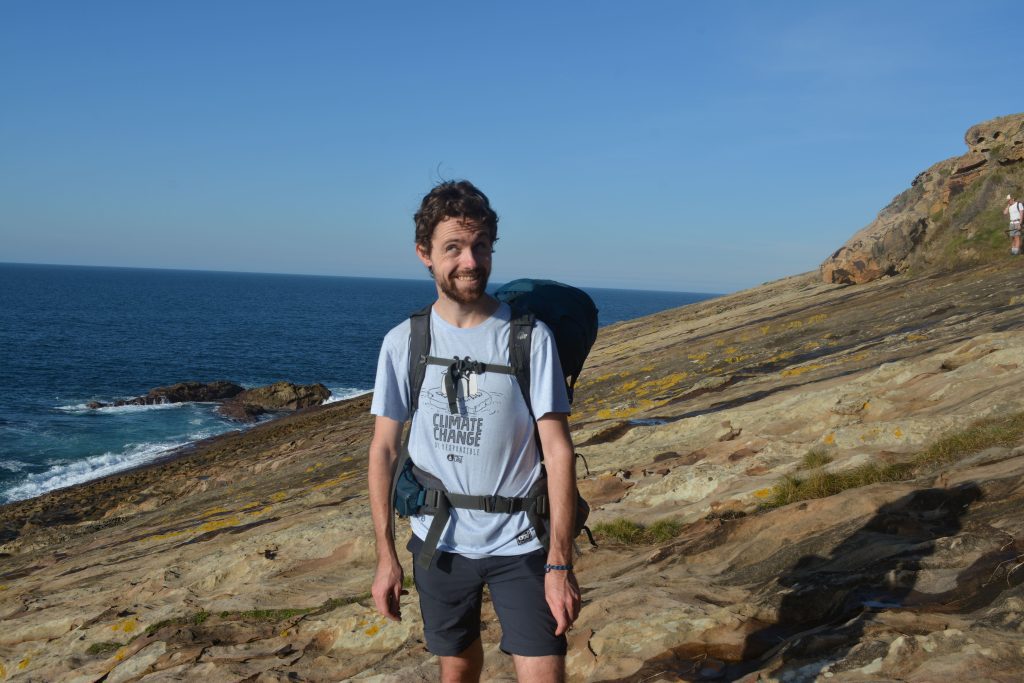
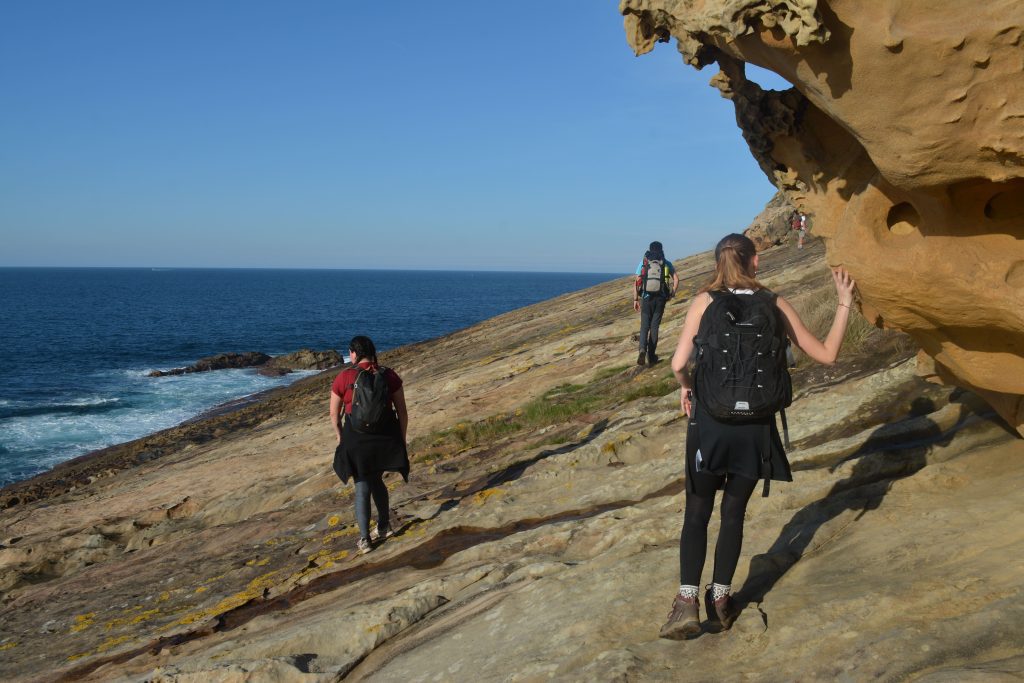
Oh, and let’s not forget, we weren’t following the easy GR11 route. No, no. We were taking the coastal route, because life’s too short for easy paths, right? As we wandered onward, we passed the iconic Jaizkibel rock formations.
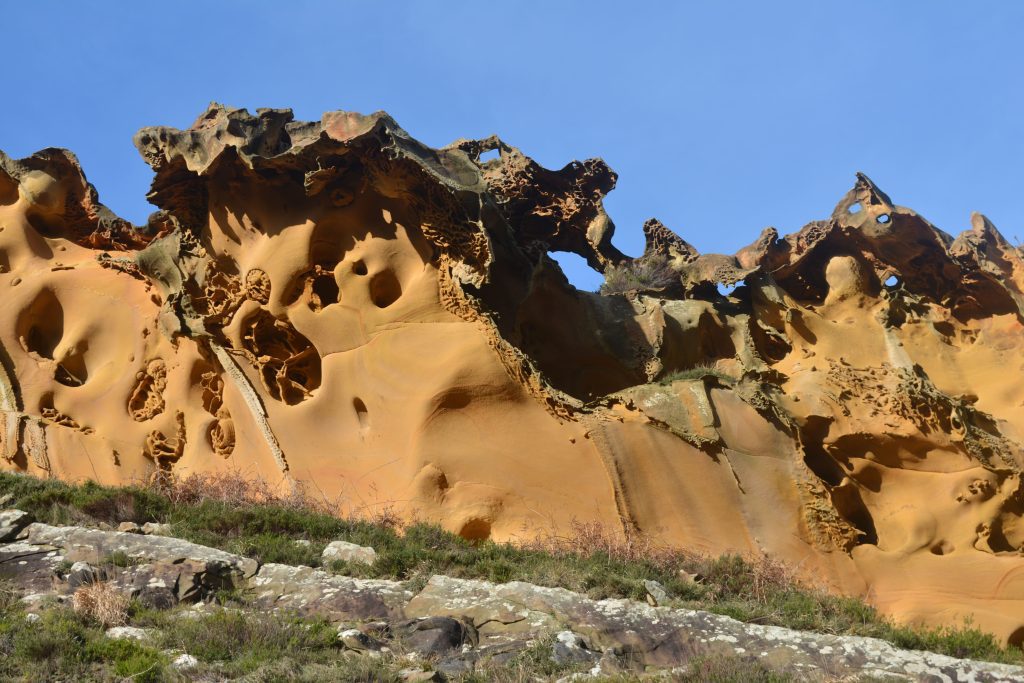
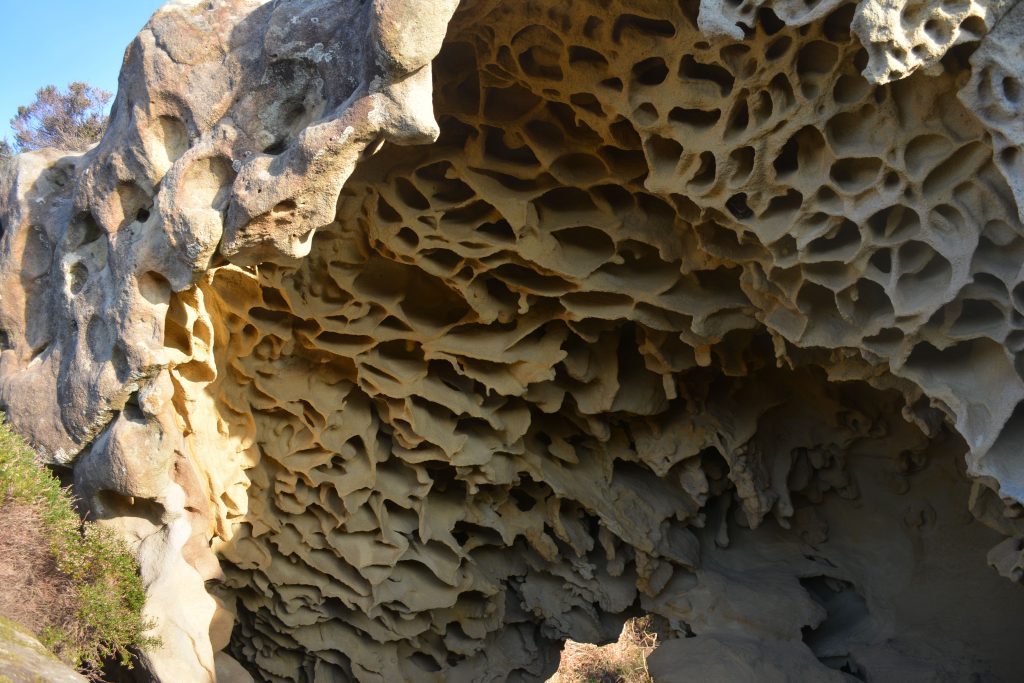
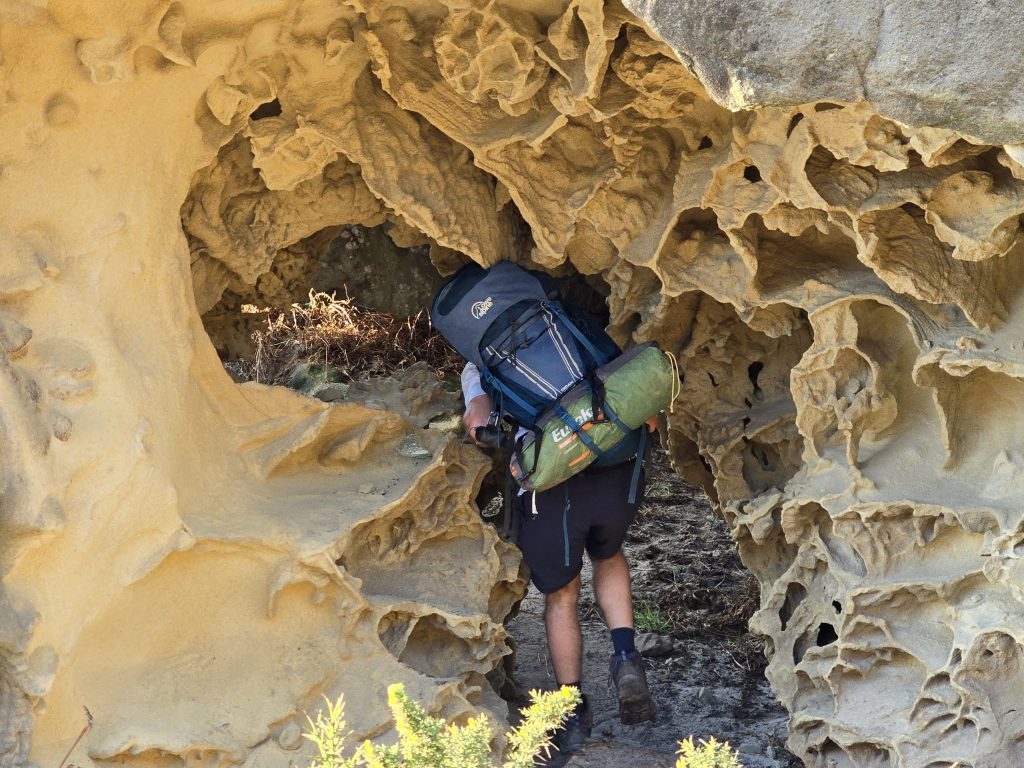
These sandy stone sculptures seemed to defy nature itself, like some kind of alien landscape waiting for us to make our move. So, naturally, we did what any sensible hikers would do: boulder them.
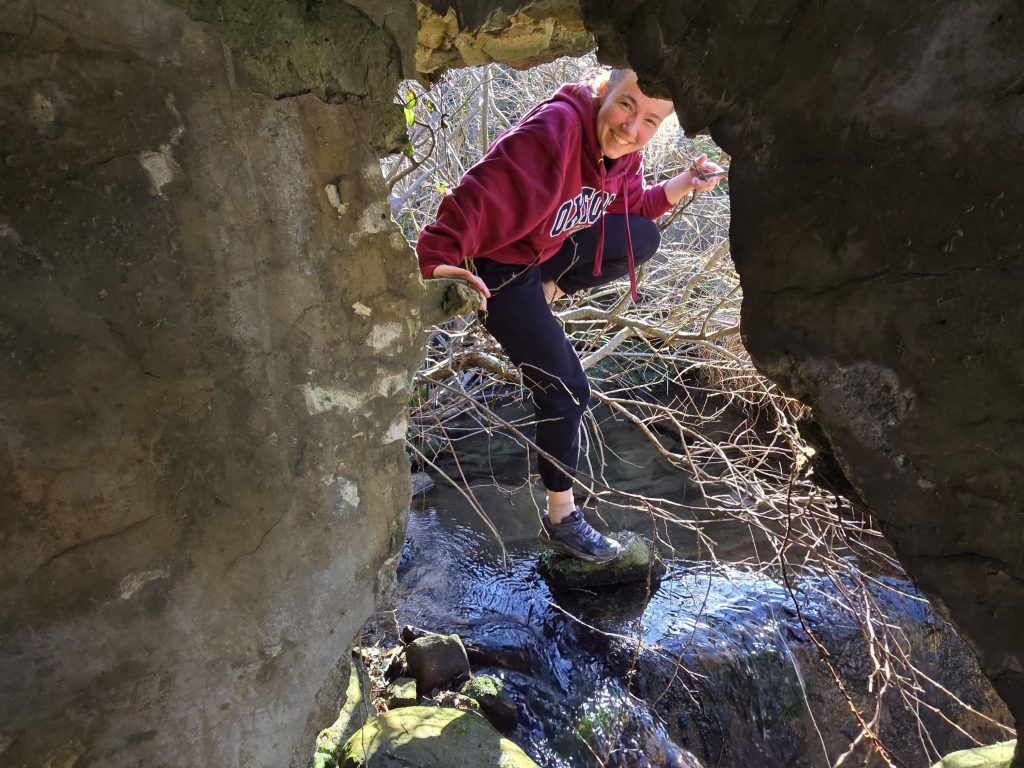
And then, oh yes, we found strange concrete formations in the middle of a small river—because of course, this place would have random concrete structures that beg to be climbed. To get there, we had to navigate a steep, loose dirt slope, then climb a small tree like we were part of some tree-climbing Olympic event. Kata and I made it look easy, while Hugo—well, Hugo decided to take the extra route, climbing branches like a lumberjack on a mission. Perhaps he was preparing for a new diet of tree bark and leaves.
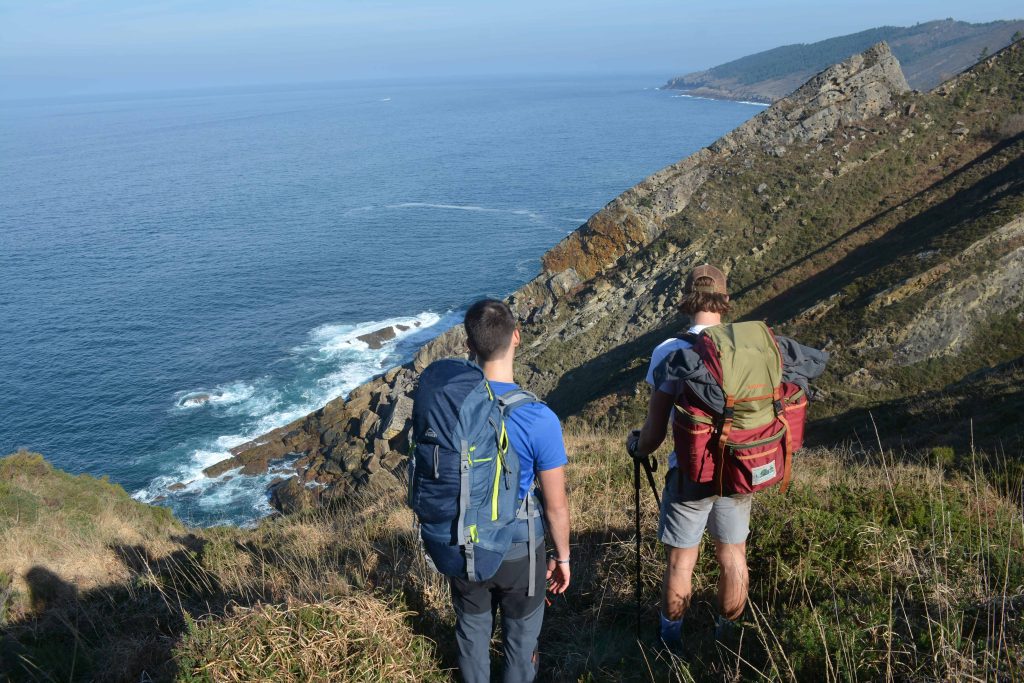
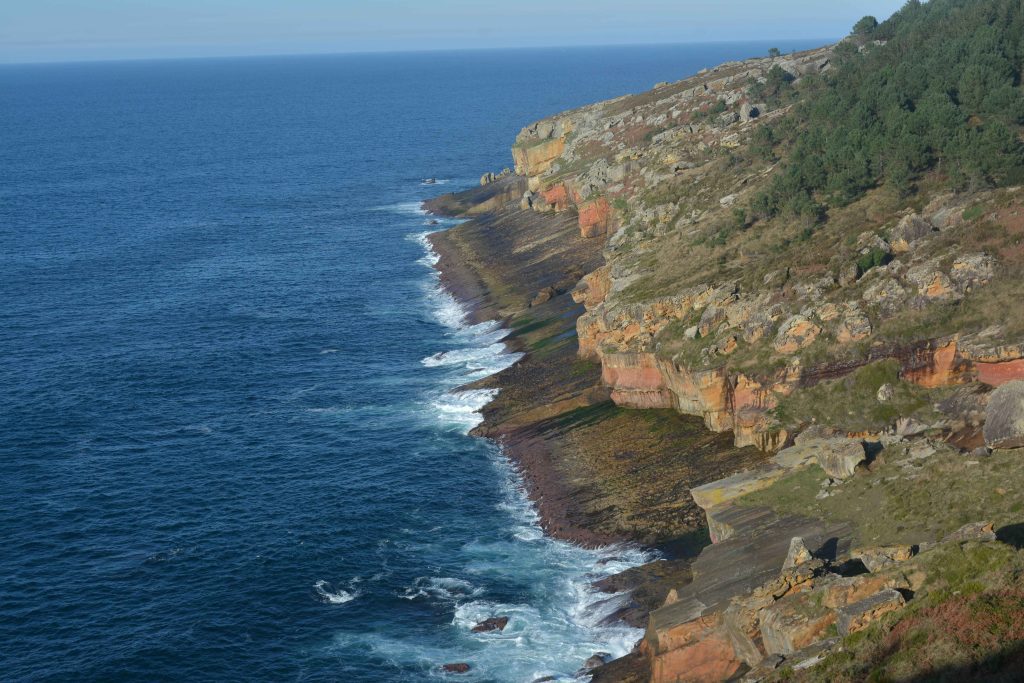
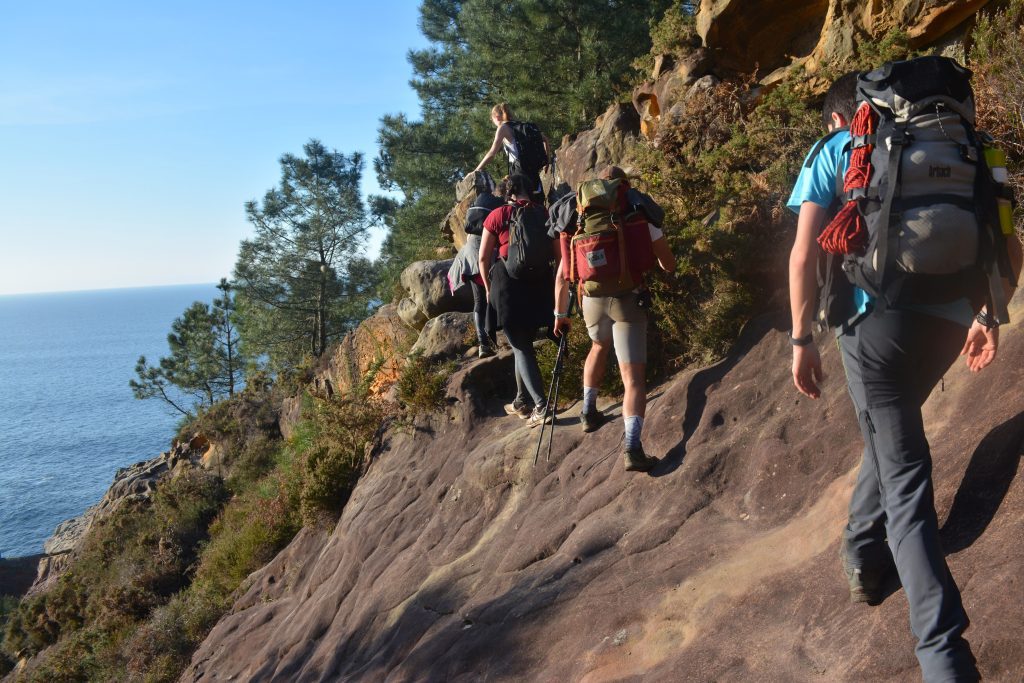
As we descended closer to the ocean, we were treated to views that could only be described as majestic. But, as with all beautiful things in life, there was a catch: steep climbs. And by steep, I mean ridiculously steep. The constant up-and-down felt like some sort of twisted form of vertical aerobics, and by the time we reached a viewpoint with a full coastal panorama, we were gasping for breath—and not from the view.
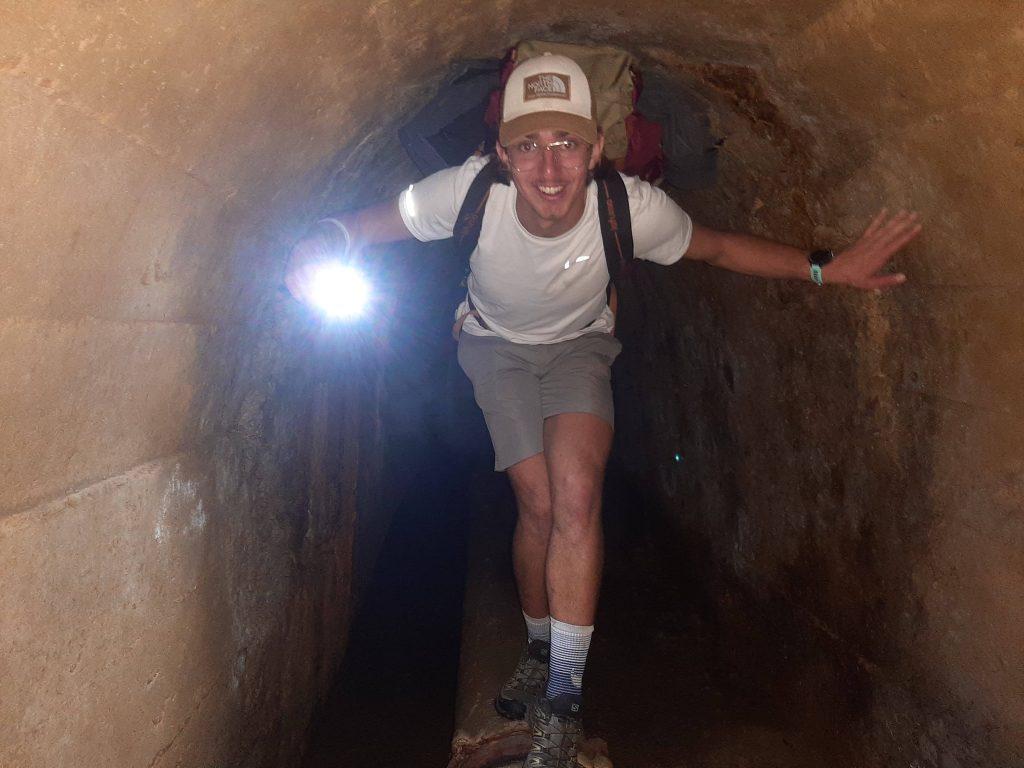
To add to the absurdity, we stumbled upon some tunnels designed to channel water from nearby streams to Lezo and Pasaia. Of course, we couldn’t resist exploring them. We ventured in, hoping for some grand exit on the other side, but instead, we found darkness, and water, and, well, the kind of dampness that makes you question your life choices. After getting soaked and realizing we were not going to emerge on the other side, we turned back—only to find the others had abandoned us. Classic. So, we put the turbo on, caught up with them, and immediately collapsed in exhaustion.
Rope Skills: DIY Safety at Its Best
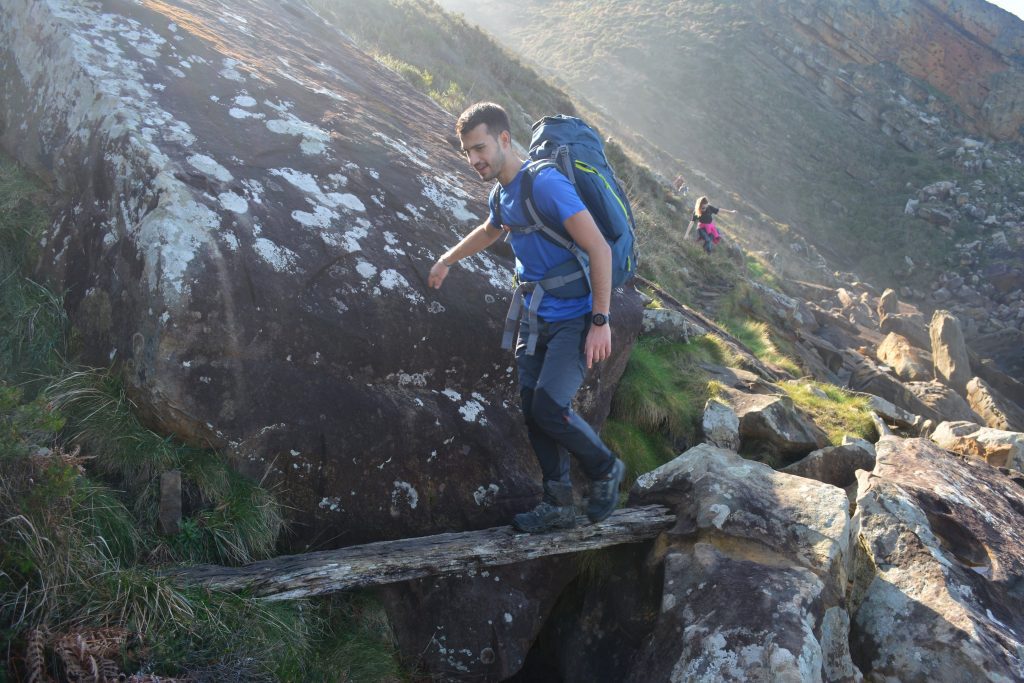
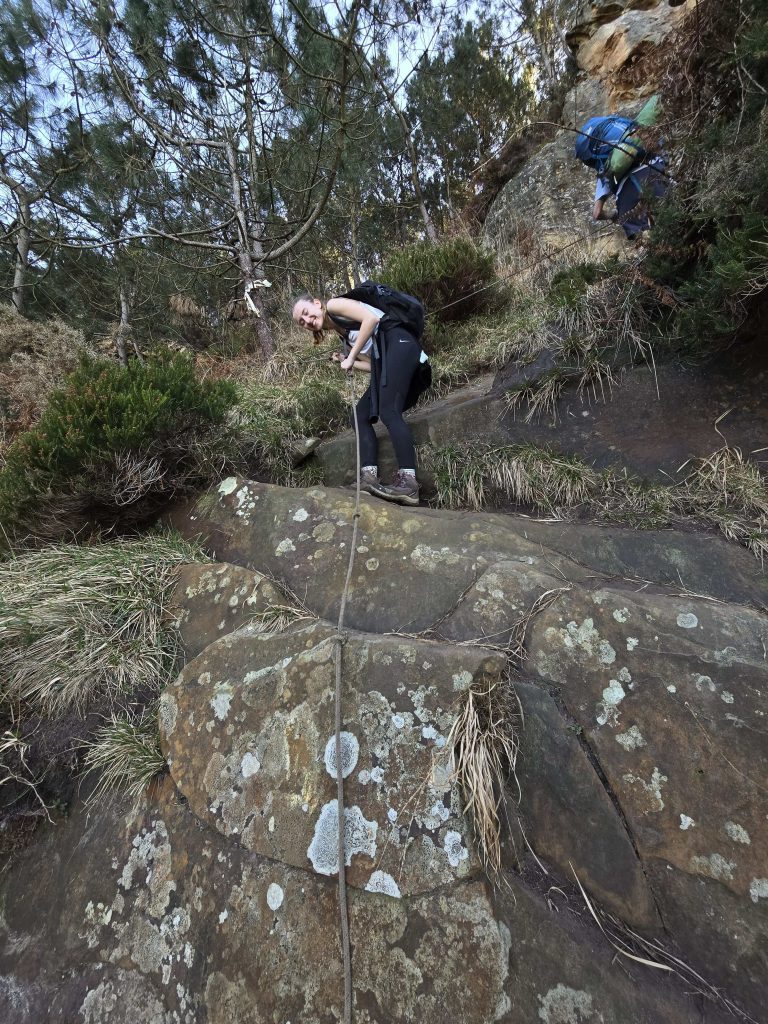
Eventually, we came across a steep, nearly vertical wall—a true test of both skill and nerve. Half of it had a roasted metal rope for safety, and the other half? Nothing. Absolutely nothing. But luckily, I had come prepared, with a 30m rope stuffed in my bag for just such an occasion. Mathis, the brave volunteer, tied the rope to the other side, and with a few carabiners, we created the kind of makeshift safety rig that could have been featured in a DIY Disaster video.
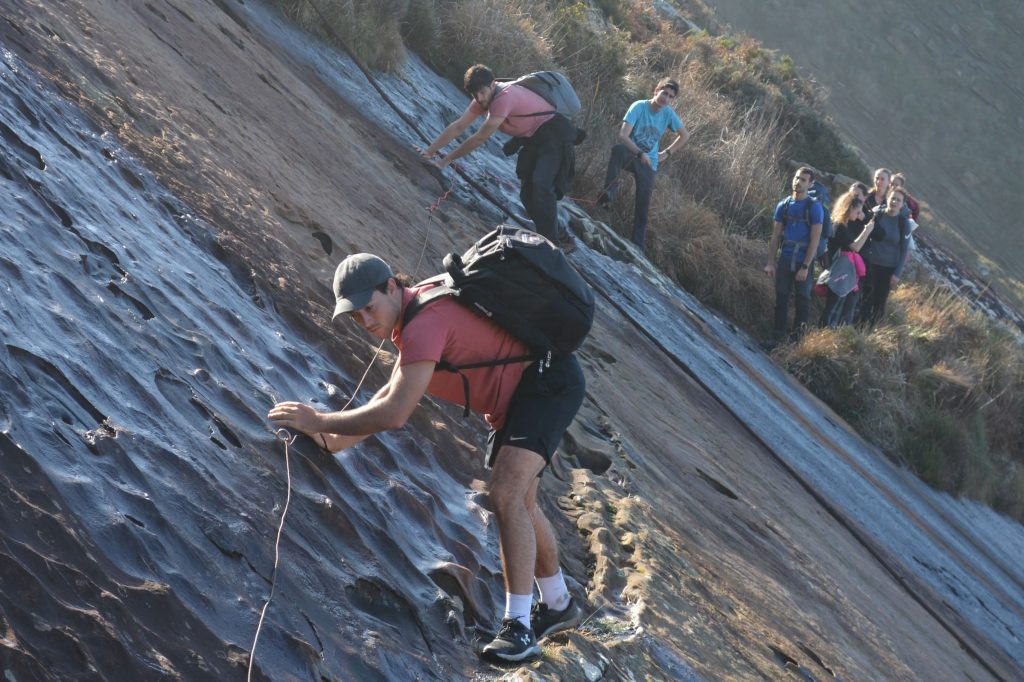
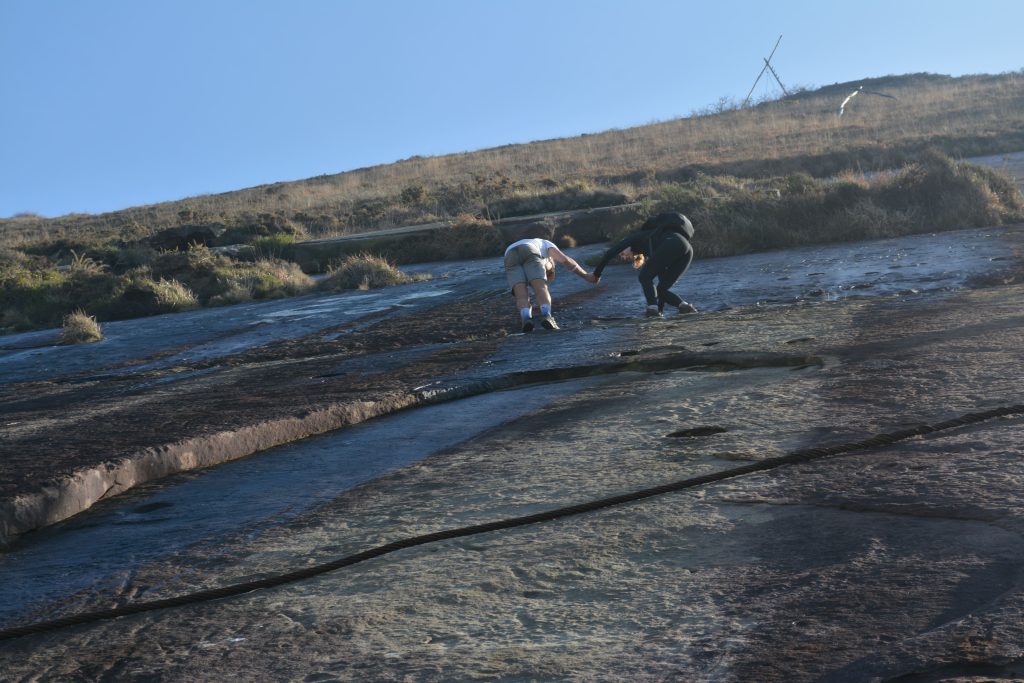
Once everyone was safely down, we reached sea level, where we plopped ourselves on a patch of grass surrounded by tree trunks (yes, tree trunks—not quite benches, but close enough). It was the perfect spot to pause, reflect, and eat our long-overdue lunch—because after that rope trick, we deserved it.
When Life Gives You Rappels and Sunsets
And then we met two locals who were doing it right. There, on a sun-kissed rock, basking in the glory of Pasaia’s panoramic coastline, were two guys, a dog, and a state of utter happiness that made us wonder if we, too, could somehow achieve such peace. The dog—let’s call him “The Wise One”—seemed completely content to do nothing but exist and gaze at the horizon. The guys were having what could only be described as a “peak life moment.” But of course, we had to ask them about the route ahead. “So, how’s the coastal path?” we inquired, because it seemed a logical thing to do at the time.
Their response? “Well, it’s possible, but you’ll need to rappel.” And there it was: the kind of advice you only get when you’re knee-deep in an adventure that’s probably out of your league. Sadly, not all of us were trained in the fine art of rappelling, so we opted for the slightly less reckless option—continuing on foot, still under the illusion that we could definitely make it.
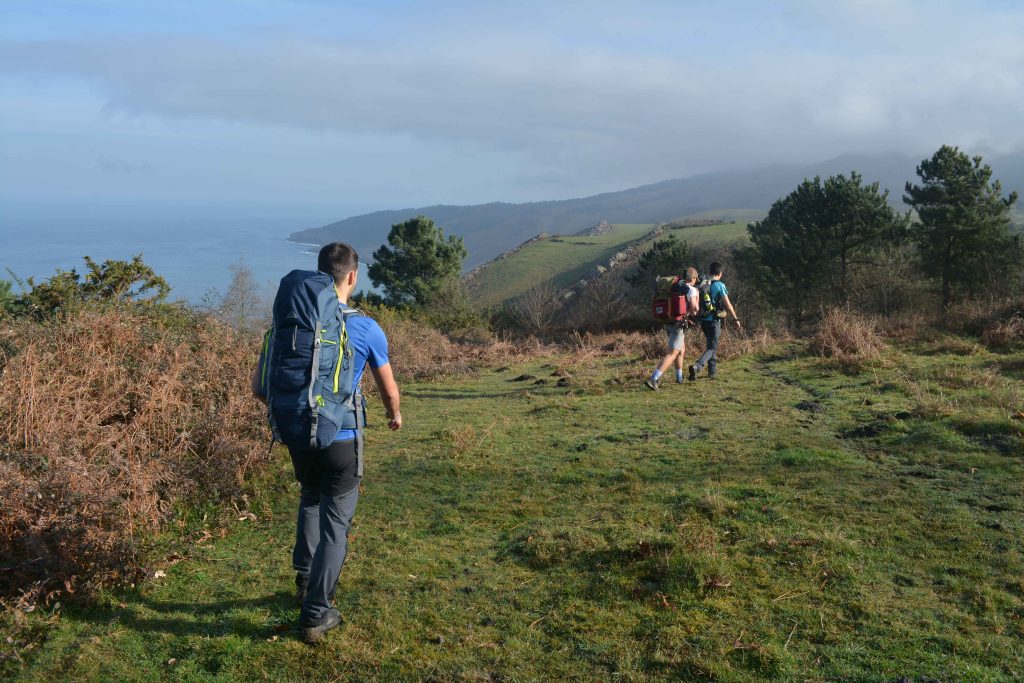
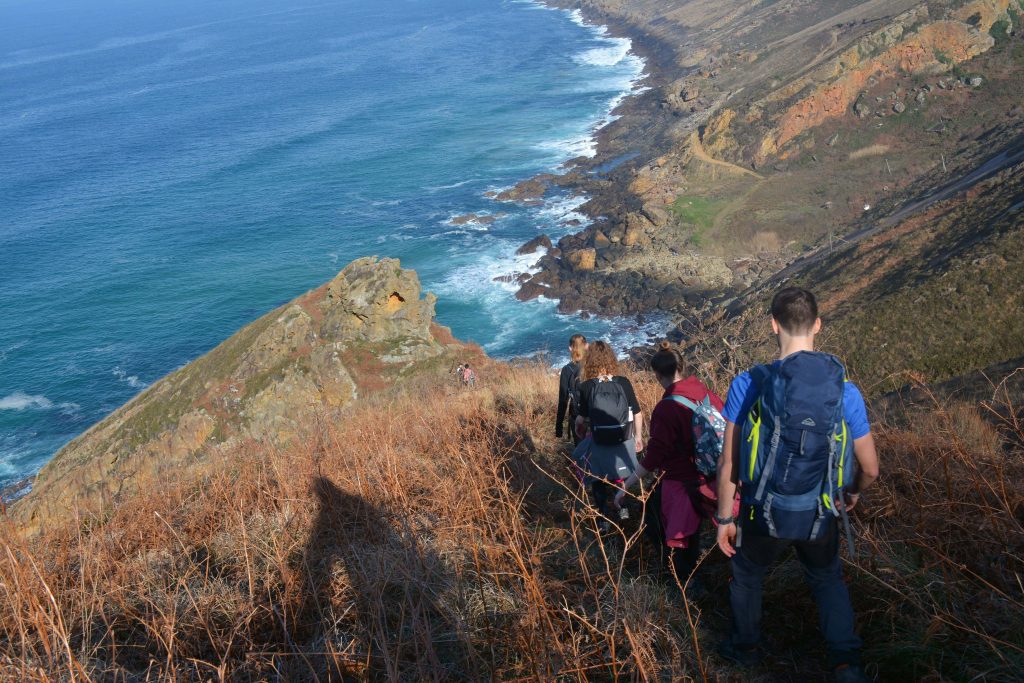
After our impromptu snack break (you know, the kind where you’ve hiked for miles and you deserve a small feast), we packed up the ropes and gear and got ready to move again. But then, like a cruel cosmic joke, we realized—time. That thing that keeps slipping away faster than your phone’s battery in the middle of nowhere. It was getting late, and the sunset—being a February sunset—was set to arrive much earlier than expected. We still had about three quarters of the hike to go, and the Argentinian duo, in a decision that we can only describe as rational, decided to bail out at the nearest exit route. They’d climb Jaizkibel’s peak to return to the city roads—a straight-forward escape plan. Kata, ever the adventurer, decided to follow, as did Samuele, who had a running race waiting for him the next day.
The French Invasion: Baguettes, Cheese, and ‘On Y Va’
Mathis, after some back-and-forth with himself (probably debating whether he could somehow outrun the sunset), eventually decided to continue as well. That left me—yes, me, stuck with the entire French contingent. And I must say, being left in the company of an all-French group suddenly made me feel like I had entered a cheese-based reality. I had no choice but to adopt my new identity as The French Speaker—fluent in cheese, baguette, and, of course, the subtle art of “on y va” after every 10 minutes of walking. I could practically feel the C1-level cheese knowledge coursing through my veins.
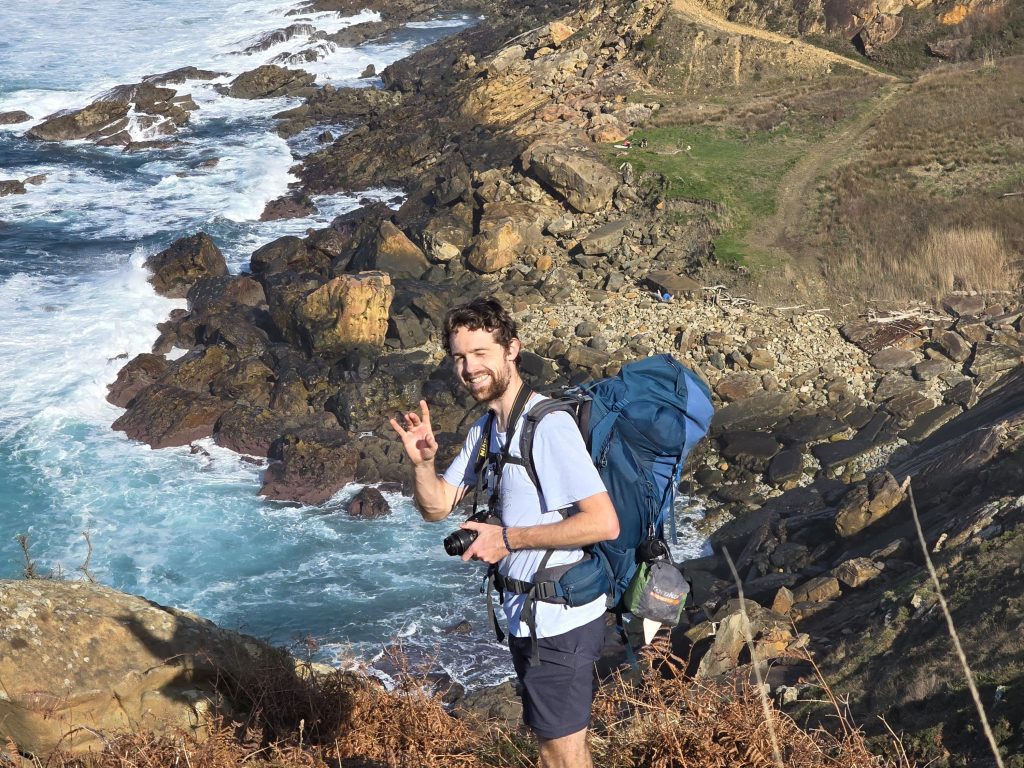
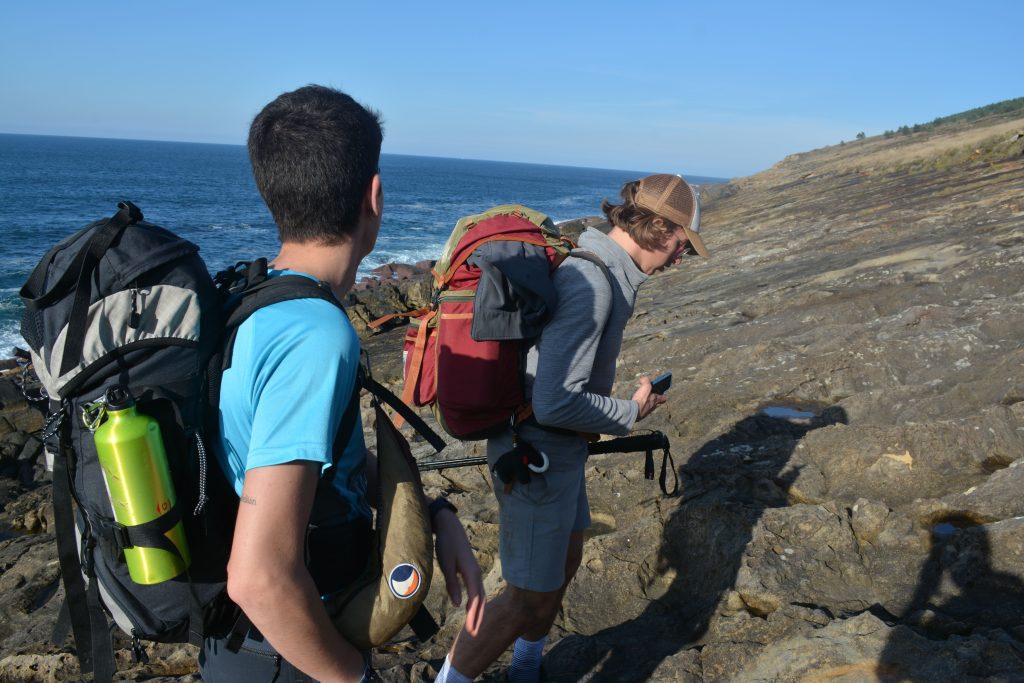
We continued along the coast for a bit, because, honestly, at this point, we were already this deep in. There was no turning back. We passed a fisherman’s shelter, “Cabaña Aimar,” which looked like the kind of place where pirates would stop to strategize world domination over a cup of something very strong.
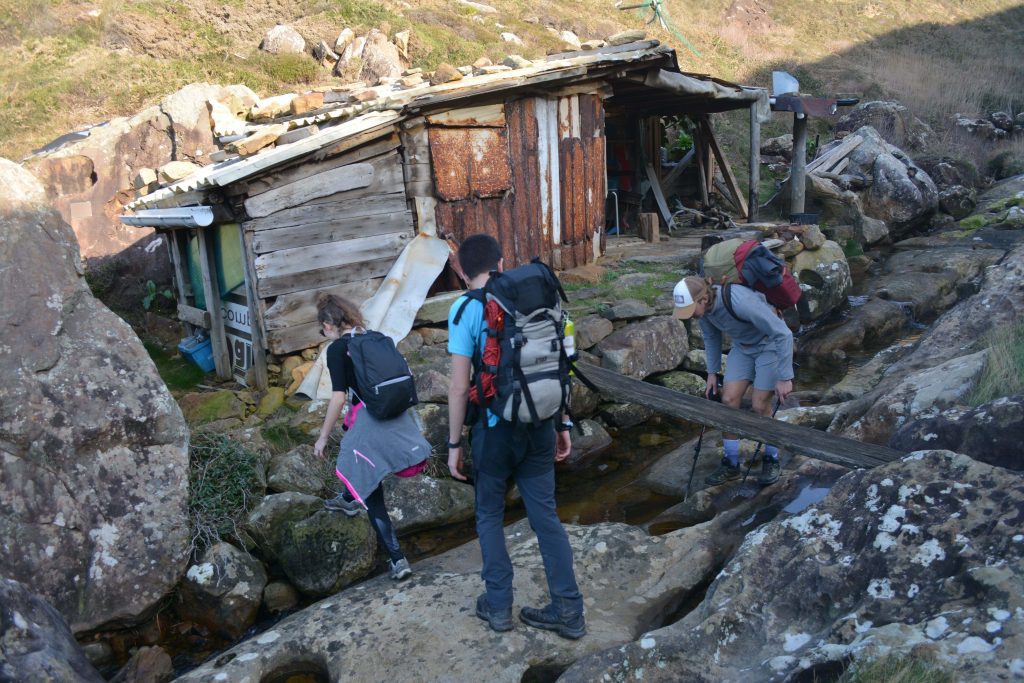
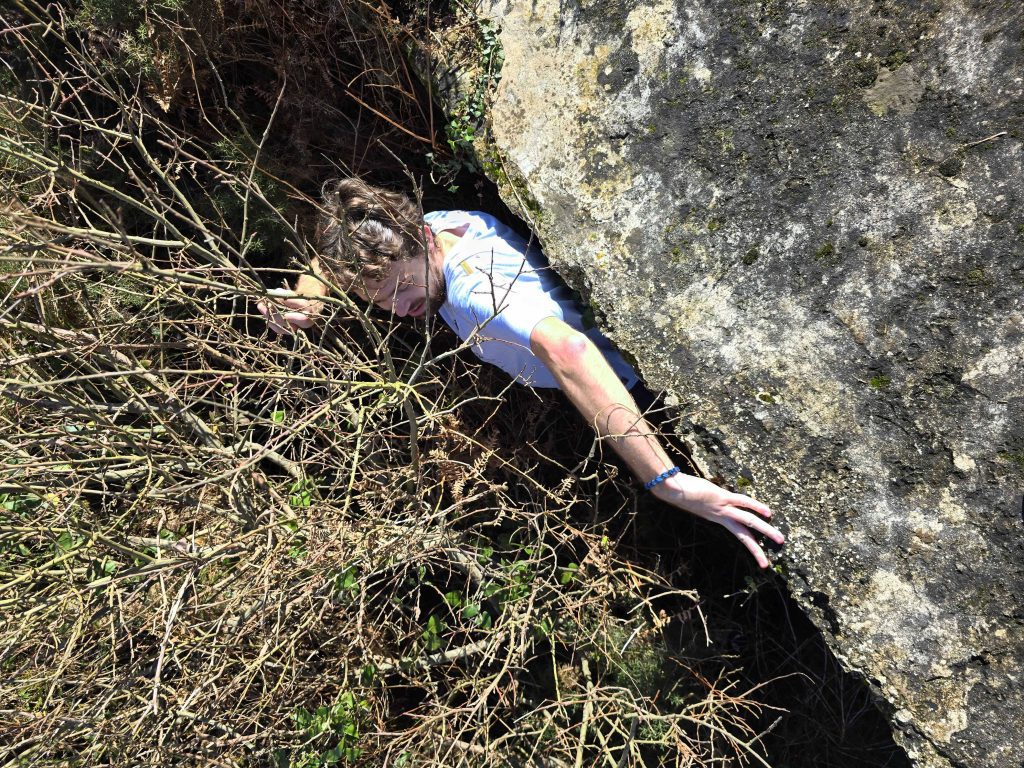
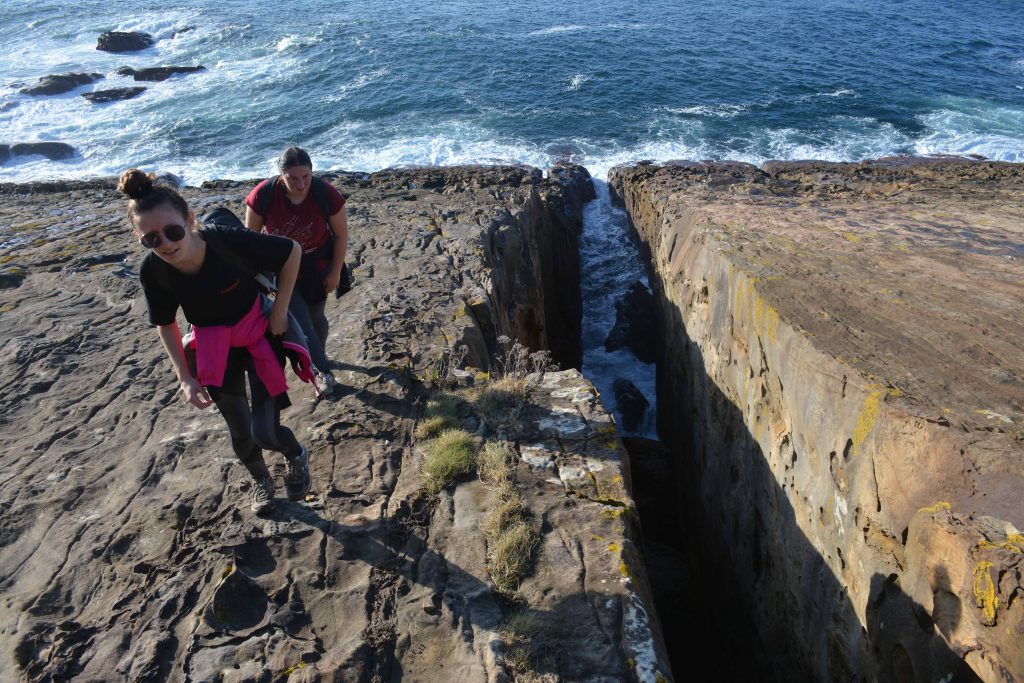
We took our time exploring this charming shelter, and then moved on to a series of stunning rock formations. Among these were large, nearly invisible cracks in the rock, like some kind of geological optical illusion. They were deep—so deep, in fact, that you could lose yourself in them. We made sure to keep a watchful eye on the ground from then on.
Mission Impossible: Rope and Rocks
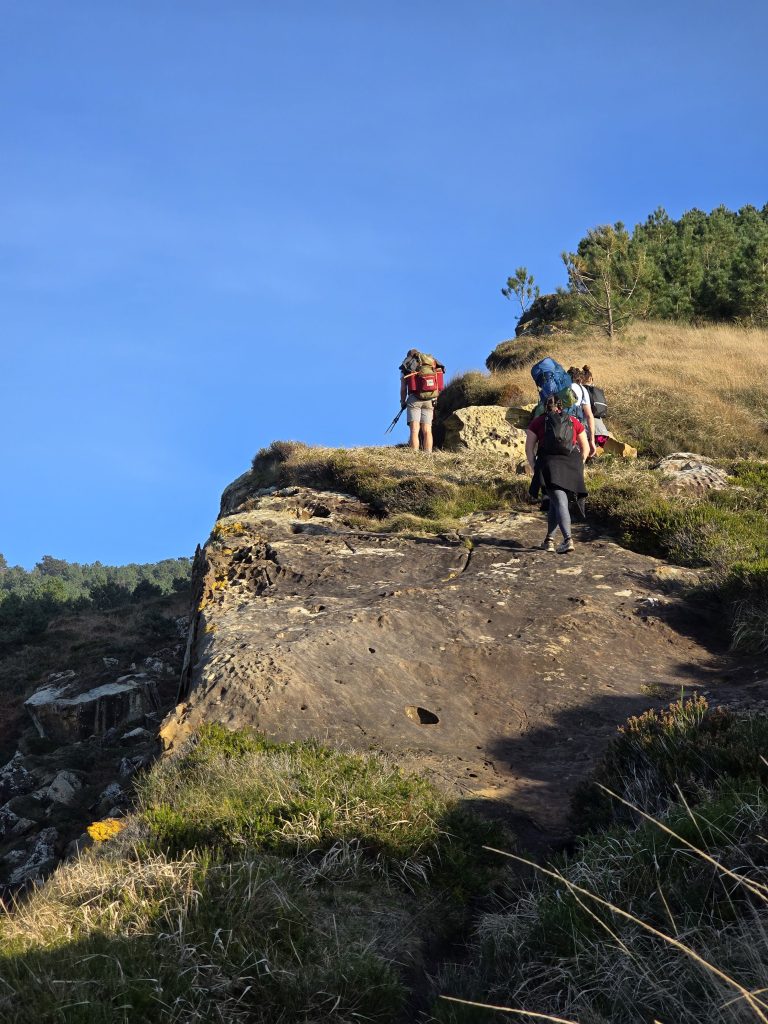
Soon, we descended into a forested area, the kind where the trees seem to whisper ancient secrets as the wind sways them. It was here that the path started to feel a little too adventurous—steep descents, anchors for rappelling on cliffs that were clearly designed by someone with a penchant for danger. Not ones to shy away from a challenge, we continued, using the occasional fixed rope to aid us in our descent. It felt a little like we were auditioning for a role in Mission Impossible.
And then—of course—came another cave. Because, why wouldn’t we find a cave? It was as if the universe had a quota for caves we were obligated to find. This cave was tucked in an unexpected corner of the forest, hidden like a treasure waiting to be discovered. As usual, it took some time to figure out exactly how to approach it on the map, but we weren’t deterred. Of course, Hugo, being Hugo, was trailing behind, taking photos as though the rock formations were going to disappear at any moment. Unbeknownst to him, he had wandered off the trail just enough for us to panic and think he’d been swallowed by a giant hole in the earth. We shouted, whistled with emergency whistles (I highly recommend these for any hike—it’s like being in a thriller), and ran back to find him a good kilometer behind. Turns out, he was just caught up in the moment, as one does when faced with beautiful rocks.
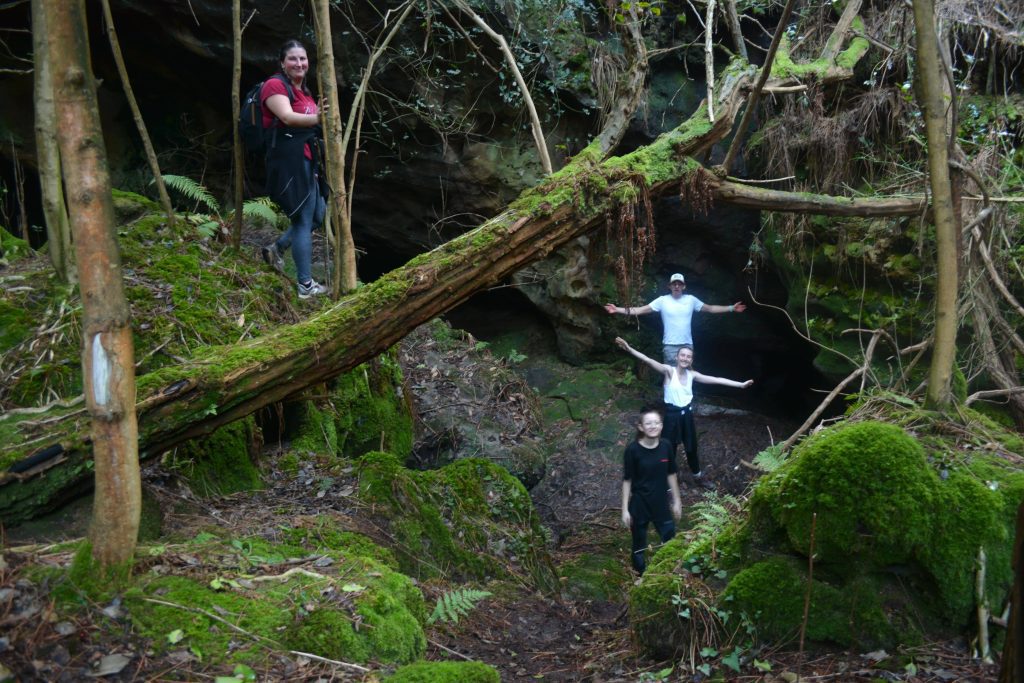
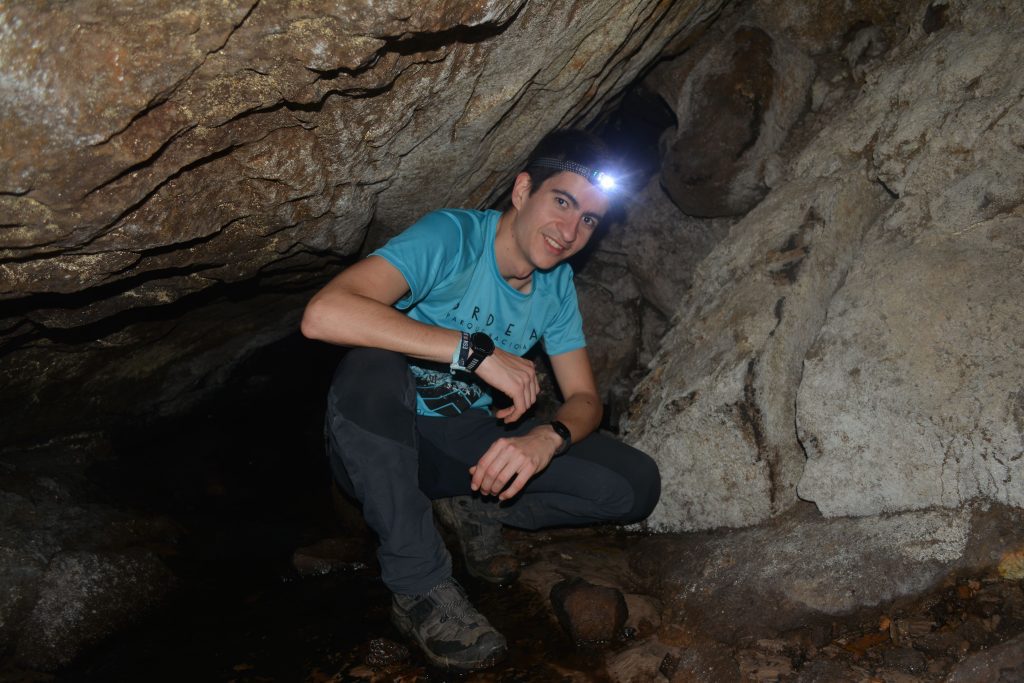
We regrouped and continued to the cave, which, while small and not exactly Indiana Jones-level deep, was still an impressive find. It was hidden in a thicket of vegetation, the kind of place where you could imagine an ancient civilization hiding from the gods (or from their in-laws). We poked around, but it didn’t take long to realize it was time to move on.
Chasing the Sunset
The sun was beginning to dip, casting a golden hue over Jaizkibel Ridge, reminding us that we were still only halfway. We had already hiked for hours and now, like the foolish optimists we were, we realized we were not even close to our destination.
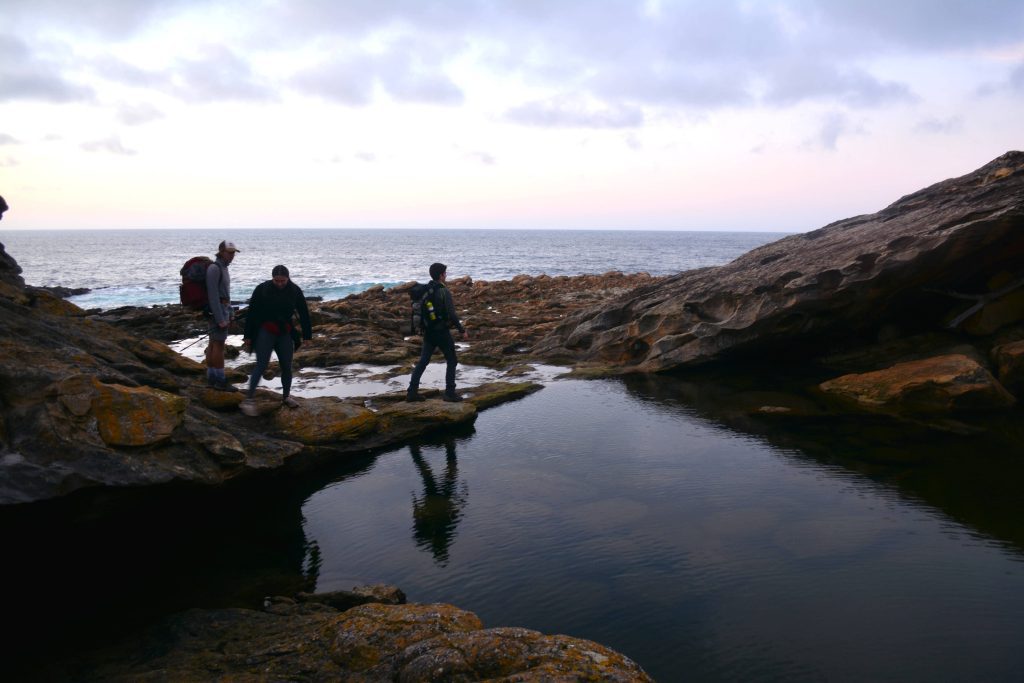
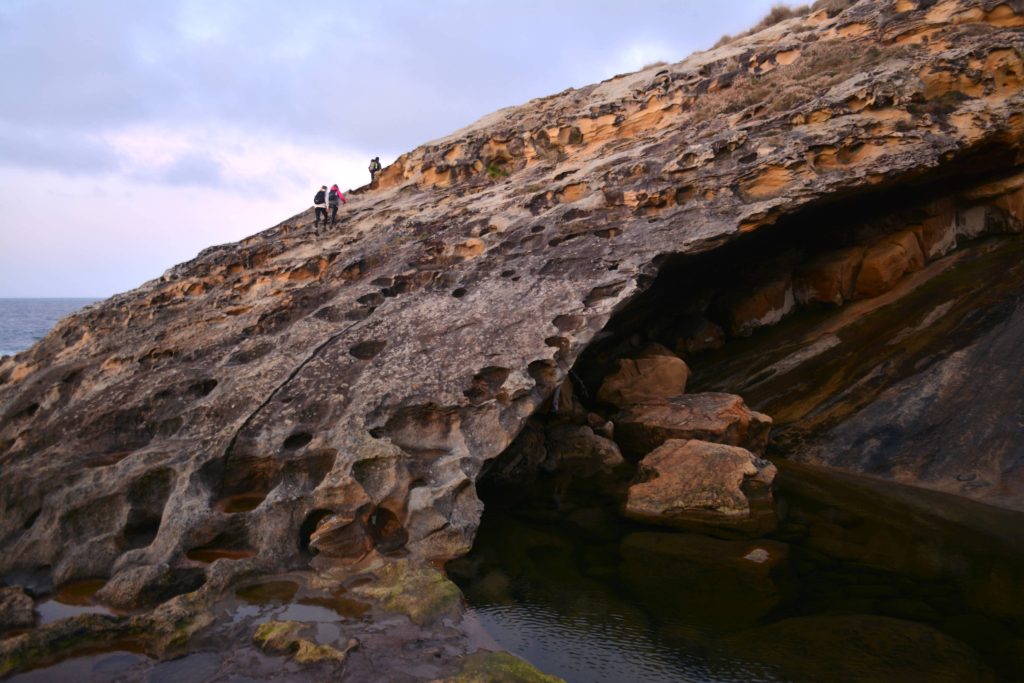
With the sun slipping away, we took a well-deserved break and ate a snack, because why not enjoy the sunset while you’re still alive? It was one of those sunsets that made you believe in magic—pinks, oranges, and purples melting into the sea, with the lighthouse of Hondarribia in the distance. But the time was ticking.
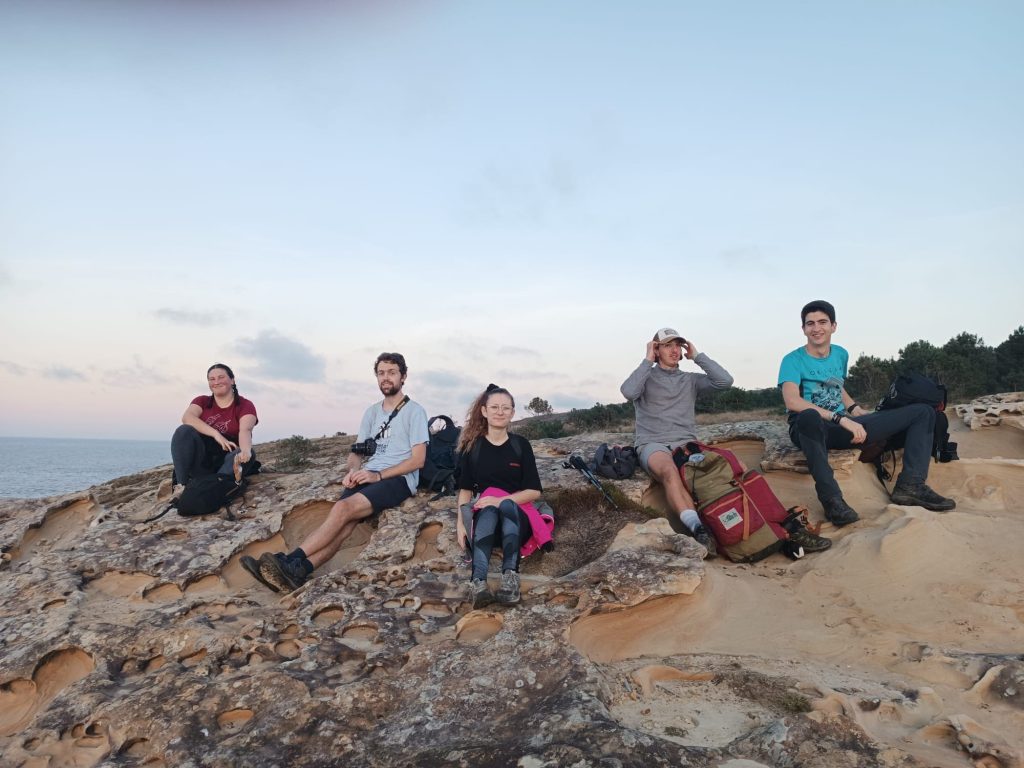
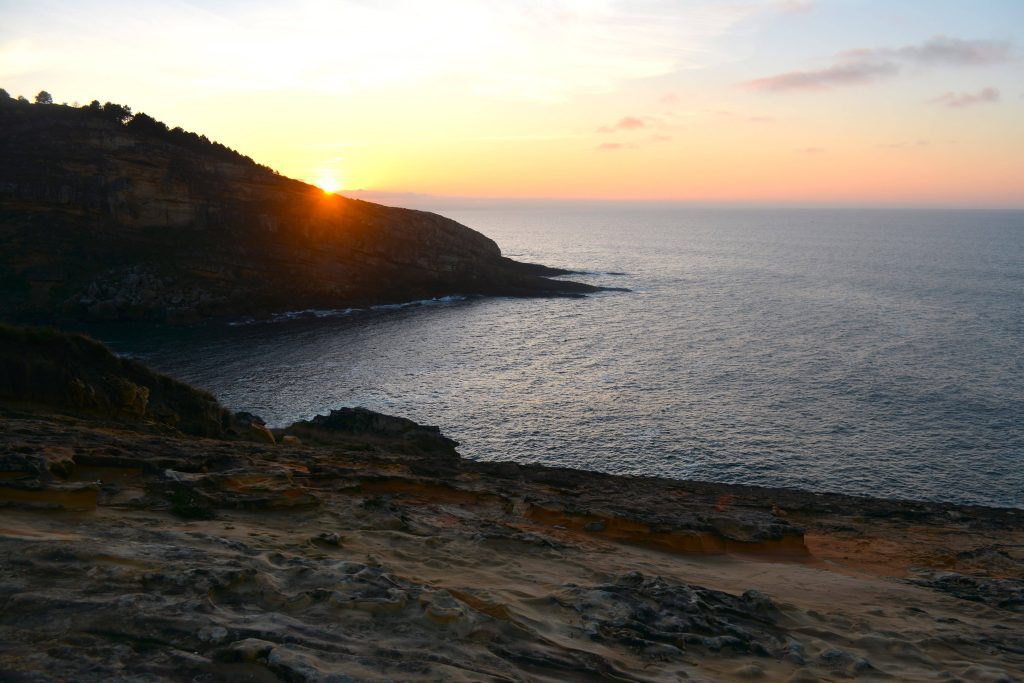
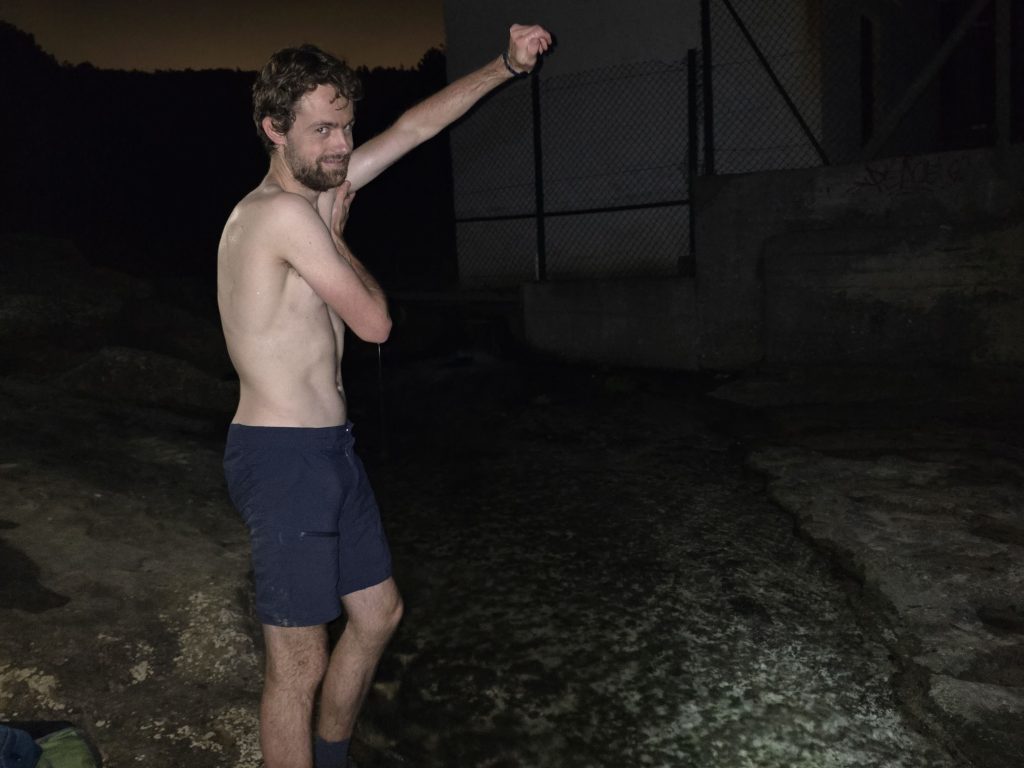
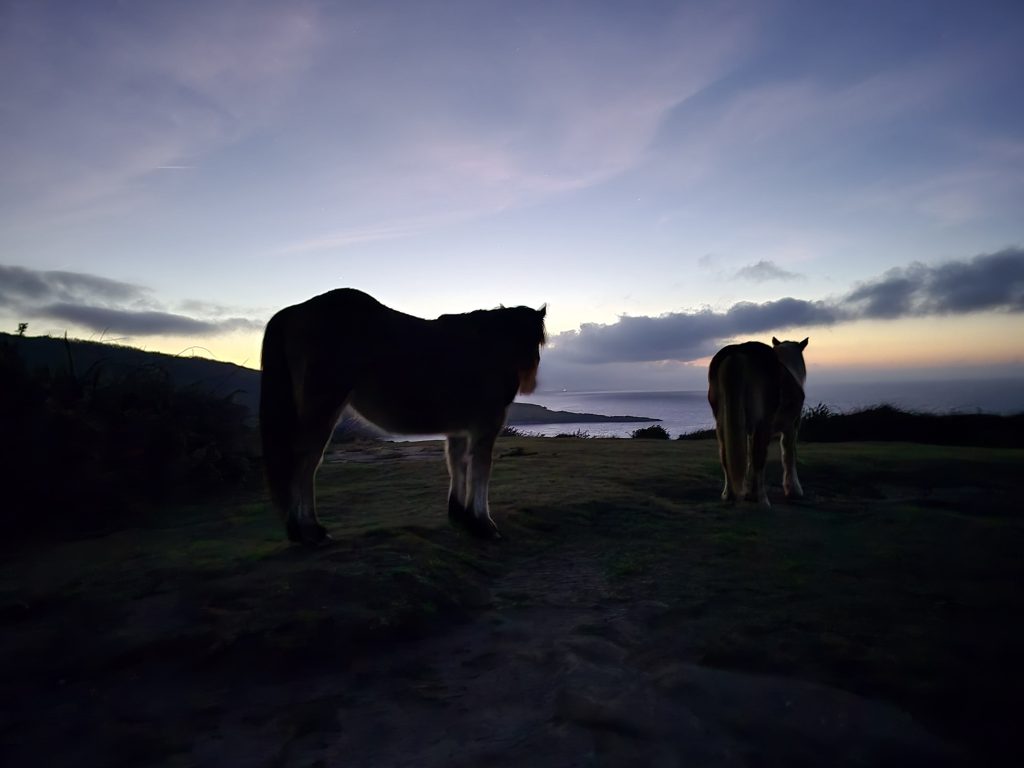
Under the “blue hour” skies, we trudged on, walking along the coast, the final slivers of daylight slipping through our fingers. Eventually, we found a fresh-water river (non-salty!), and Hugo decided this was a sign that he deserved a shower. As he bathed with ecological soap, a few curious horses watched him from the hilltop, clearly judging his decision, as if they too were questioning their life choices.
But it wasn’t long before we reached the final stretch. Our legs were aching, the dark was growing thicker, and we had barely taken any photos—too busy surviving. We still had a long way to go, and the light of the Hondarribia lighthouse, which had been our beacon for so long, seemed impossibly far.
Running Low on Water & Patience
To make matters worse, we were out of water. The only thing we had for six people was one bottle of cider (which we saved for emergencies)—yes, cider—and we rationed it. Each of us took a small sip, and the relief was nothing short of magical. That single drop of liquid gave us the strength to continue, like some sort of ancient elixir.
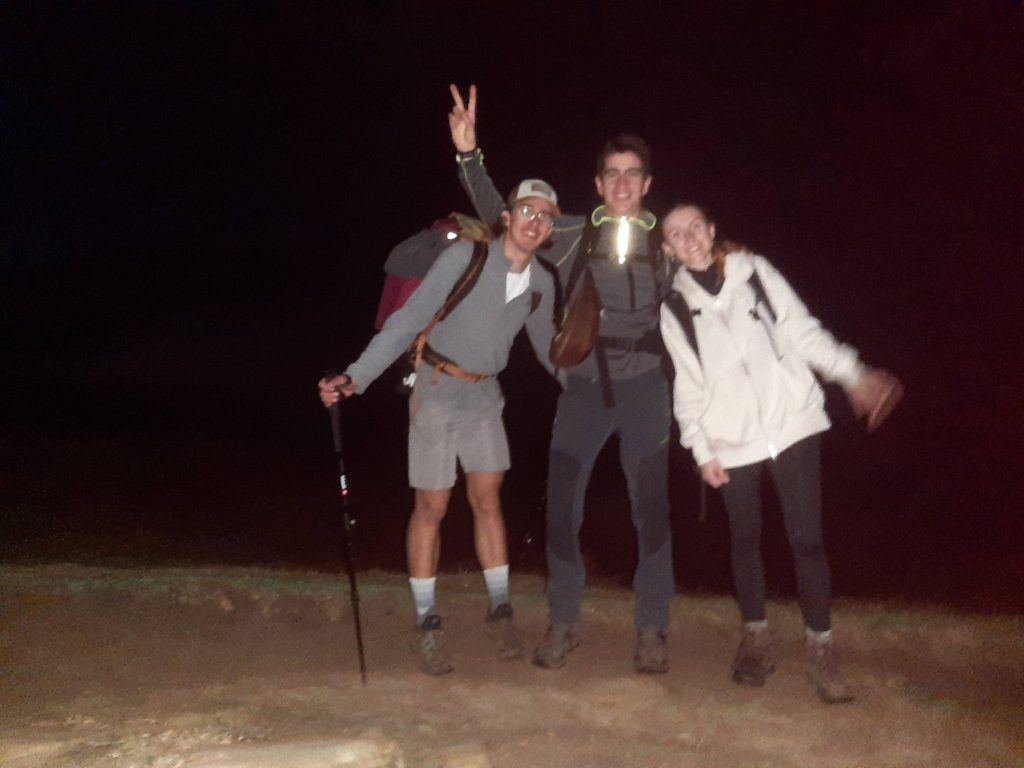
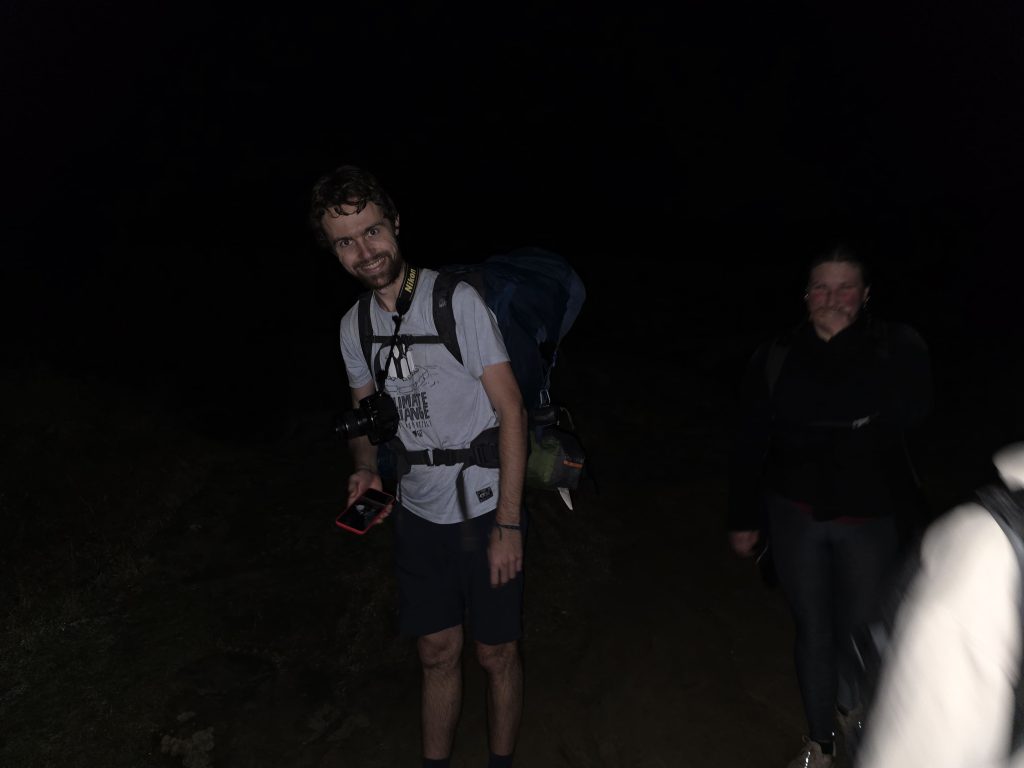
The final stretch was the kind of hike where talking became a distant memory. You’re so tired, you just move forward, one step at a time. Finally, Hugo and I split off from the rest of the group to reach the lighthouse first. They still needed to catch the last train to Donosti.
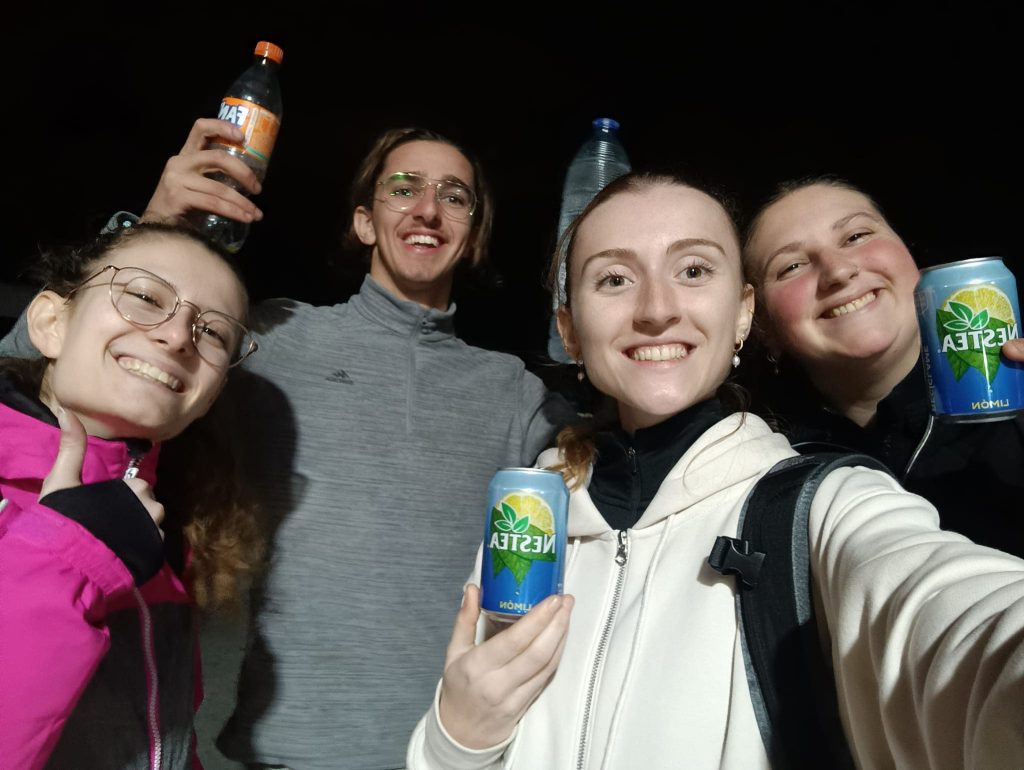
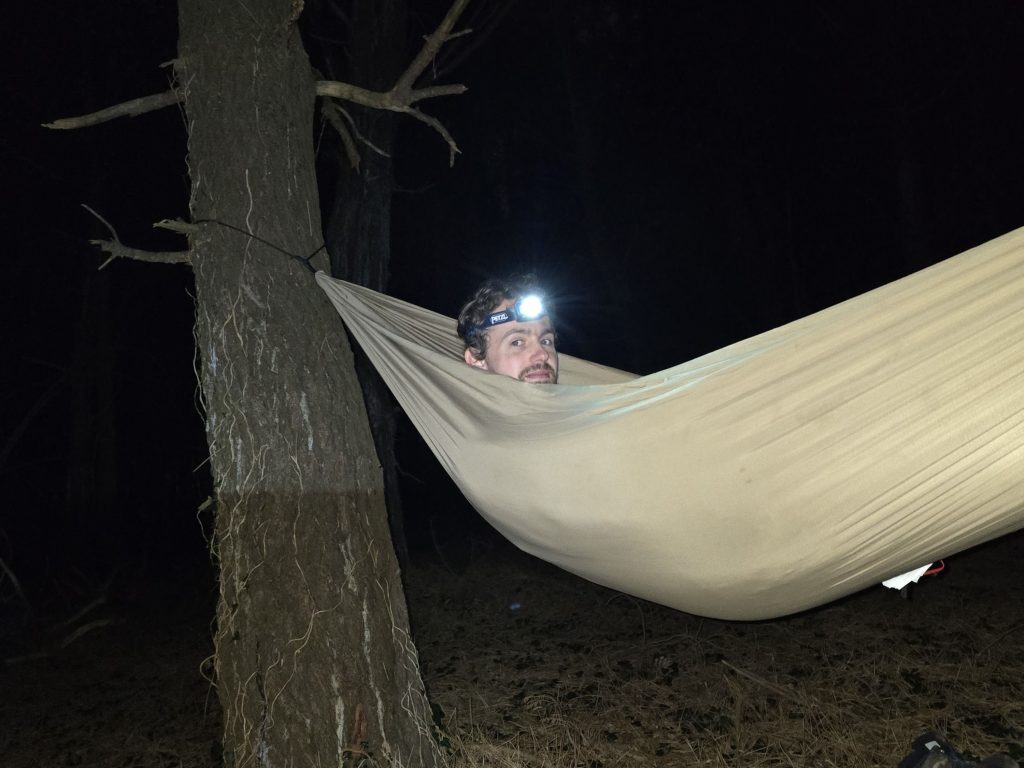
We wandered into the deep, dark forest, hoping we weren’t trespassing on private property, and set up our hammocks. We ate the last scraps of food and fell asleep before 21:00, utterly exhausted. Meanwhile, the others were at the lighthouse, toasting with drinks we could only dream of.
The night was colder than expected. Around 5:30, we were awoken by the sound of barking dogs and the distant thudding of runners. A canicross race was happening, and the runners’ determined faces were a reminder of the insane world we had entered. We packed up, slalomed through the race, and made our way to Hondarribia.
The Final Push: Pastries and Victory
Around 7:00, we found the first bakery open and devoured fresh pastries (Napolitanas and Pastel Vasco) with hot coffee. The warm food was a taste of salvation, and we couldn’t help but remember our friends—Mathis and Samuele—running their race in Donosti that morning. We caught the first bus there, and somehow, managed to arrive just in time to cheer them on at the finish line.
Mathis and Samuele, fresh and energetic, crossed the finish line like nothing had happened. Meanwhile, Hugo and I, wearing jackets and still smelling like wild adventure, felt the cold of the night in our bones.
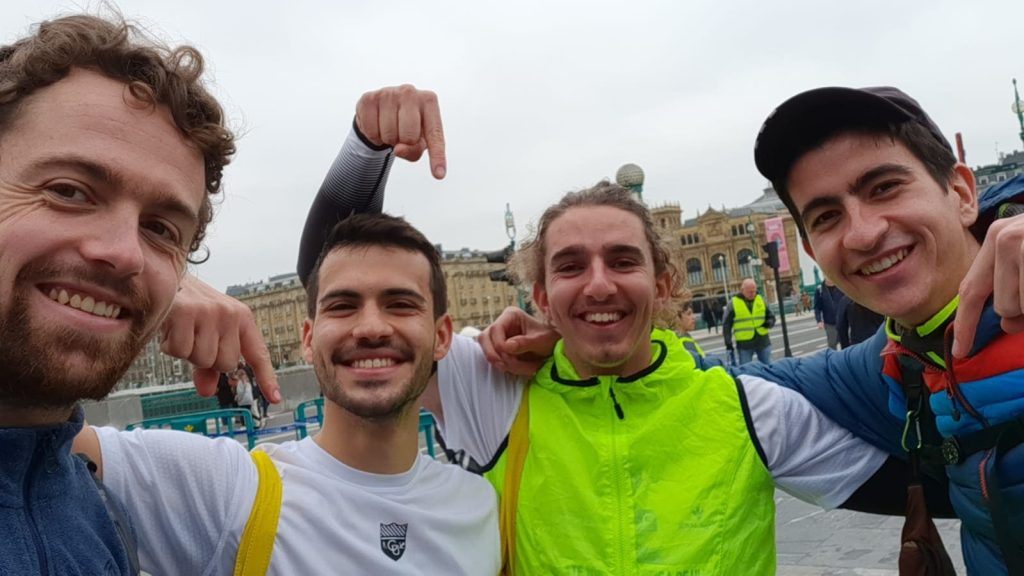
And so, this 22-km hike with 1300 meters of elevation, classified as expert-level, came to an end. We had conquered the coast, survived the night, and emerged victorious—though sore, tired, and possibly in need of a shower. But that, my friends, is another story.